You made the sale. Now comes the part customers remember most. Getting the order to their door.
Fast, careful delivery turns a first-time buyer into a regular. Slow, messy delivery turns them into a bad review.
This guide explains ecommerce shipping and fulfillment in plain words, so you can set it up right from day one.
Shipping vs Fulfillment, What's the Difference?
People often use the words as if they mean the same thing. They don't.
Fulfillment is everything that happens from the moment an order comes in until it leaves your hands. Storing stock, picking the product, packing it and handing it to a carrier.
Shipping is the trip from your hands to the customer's door. Choosing a carrier, paying for postage, tracking the package and delivering it.
Get both right and customers barely notice. Get either wrong and it's all they talk about.
How an Order Gets Delivered
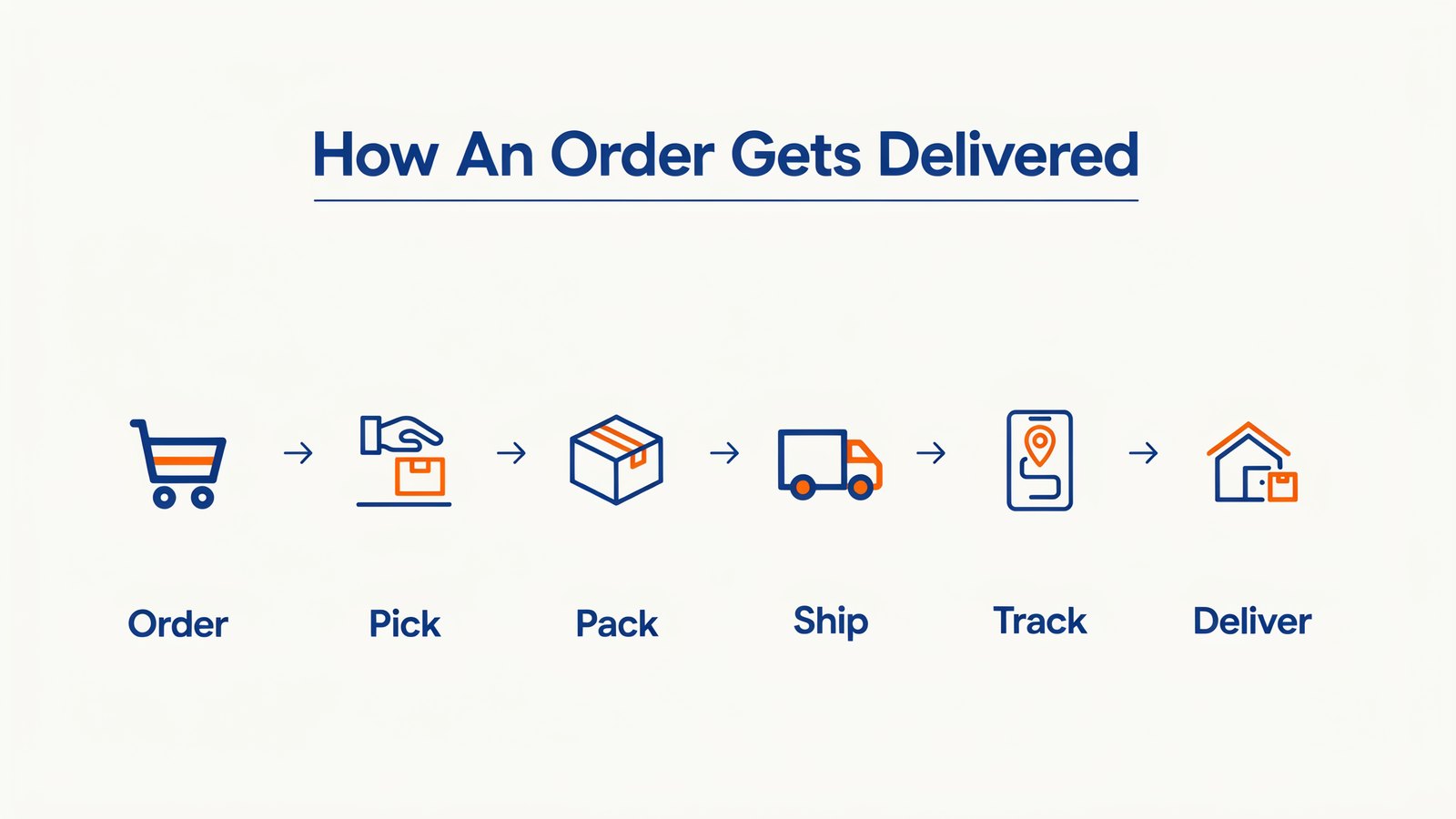
Every order follows the same basic path.
- Order. A customer buys from your store and pays.
- Pick. Someone finds the right item on the shelf.
- Pack. The item is packed safely with an invoice or a thank-you note.
- Ship. A shipping label is printed and the parcel goes to the carrier.
- Track. The customer gets a tracking link by email or text.
- Deliver. The package arrives, and hopefully, a happy customer posts a review.
Your job is to make each step fast, accurate and easy to repeat. Write each step down as a short checklist, so anyone who helps you can pack an order exactly the way you would.
The 4 Ways to Fulfill Orders
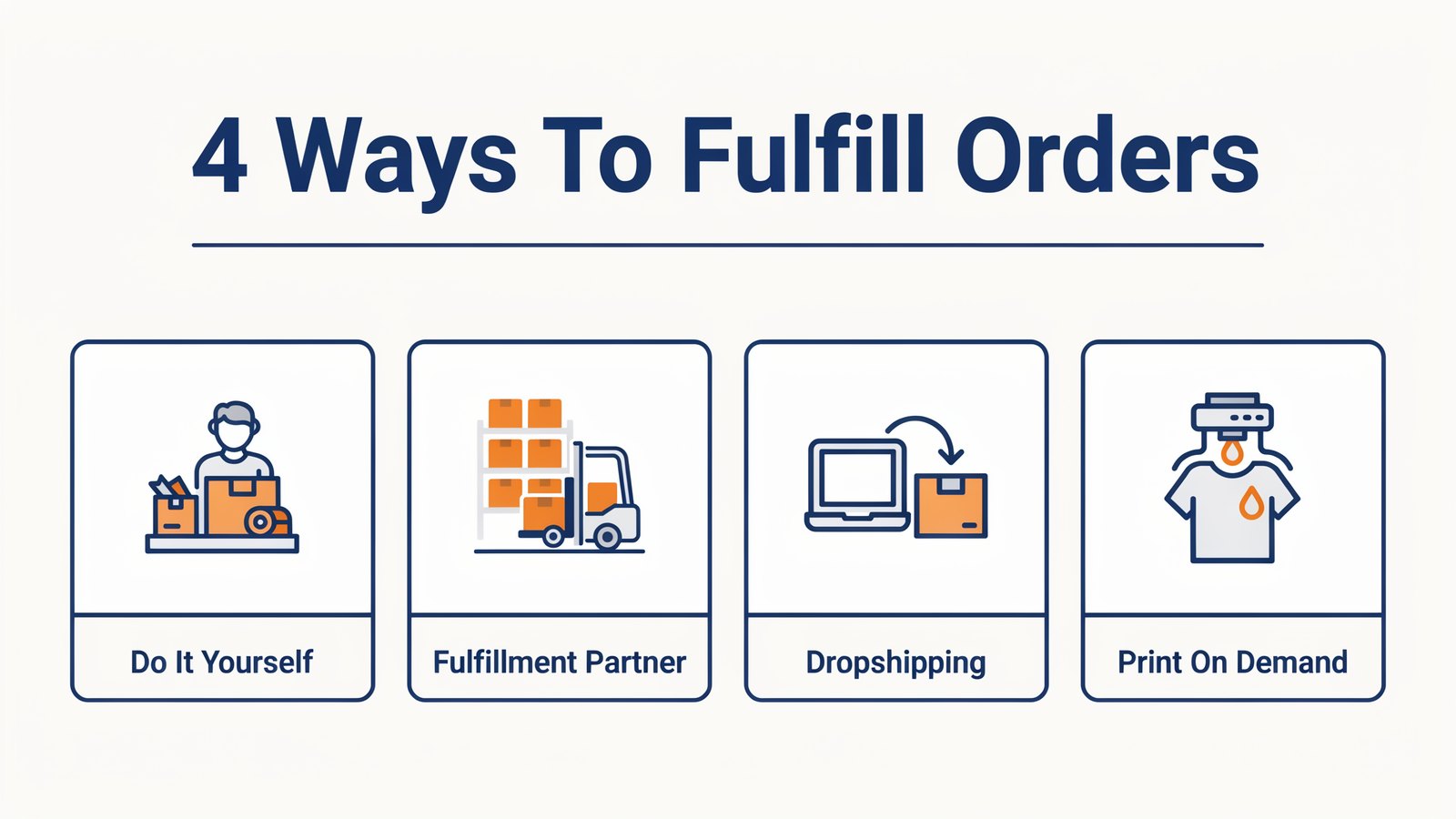
1. Do It Yourself
You store the products at home or in a small unit, and you pack and ship every order. It's cheap and gives you full control, which makes it perfect when you're starting out.
The downside is time. Once you're shipping dozens of orders a day, packing can eat your whole week.
2. A Fulfillment Partner
A fulfillment company, often called a 3PL (third-party logistics), stores your stock in its warehouse and ships orders for you. You pay for storage, picking and packing, plus postage.
It's great for growing stores that want to spend time on marketing instead of tape guns. Many 3PLs also get better shipping rates than a small store can.
3. Dropshipping
You never touch the product. When someone orders, the supplier ships directly to the customer. It's low risk and needs almost no money upfront.
But you have less control over quality, packaging and delivery times, and margins are usually thin. Choose suppliers carefully and order samples first.
4. Print on Demand
Perfect for t-shirts, mugs, posters and other custom products. A print partner makes each item only after it's ordered, then ships it for you. No stock, no waste, but slower delivery and lower margins.
Which Fulfillment Method Is Right for You?
| Method | Upfront Cost | Control | Best For |
|---|---|---|---|
| Do it yourself | Low | Full | New stores and small volumes |
| Fulfillment partner | Medium | Good | Growing stores with steady sales |
| Dropshipping | Very low | Low | Testing products with little cash |
| Print on demand | Very low | Low | Custom designs and merch |
Many stores mix them. For example, you might pack your best sellers yourself and dropship the rest.
Inventory Basics
Fulfillment starts long before an order arrives. If you run out of a best seller, no shipping strategy can save that sale.
Keep a simple record of how much stock you have and how fast each product sells. Set a reorder point for each item, the level at which you order more so you never run dry while waiting for new stock.
Store your fastest sellers closest to your packing area. It sounds small, but it saves real time every day.
Count your stock regularly, even if your store tracks it automatically. Small mistakes add up, and a quick check each month keeps your numbers honest.
Choosing a Shipping Strategy
How you charge for shipping has a big effect on sales. Surprise shipping costs at checkout are one of the most common reasons people abandon their carts.
Free shipping. Shoppers love it. You build the cost into your prices. Works best when your margins are healthy.
Free shipping over a set amount. For example, free shipping on orders over $50. This lifts your average order size and protects your margins on small orders.
Flat rate. One simple price for every order. Easy to understand and easy to manage.
Real-time carrier rates. The exact cost based on weight and distance. Fair, but less predictable for shoppers.
Local pickup or delivery. Great for local businesses. Free for customers and fast.
Whatever you choose, show the cost and the estimated delivery date clearly on your product pages.
Picking a Carrier
Compare at least two or three carriers before you commit. Look at price, speed, tracking, insurance and how reliable they are in your area.
Shipping software and multi-carrier platforms let you compare rates side by side and print labels in bulk, often at discounted prices. For a growing store, that saves both money and time.
Don't forget your packaging weight and size. Many carriers charge by "dimensional weight," so a big, light box can cost more than a small, heavy one.
Packaging That Protects and Sells
Packaging has two jobs. Keep the product safe, and make a good impression.
- Use the smallest box or mailer that fits safely
- Add padding for anything fragile
- Include a packing slip and a short thank-you note
- Add a discount code for the next order
- Choose recyclable or compostable materials where you can
A great unboxing moment costs very little and gets shared on social media more often than you'd think.
Branded tape or a simple sticker with your logo is an easy upgrade. It makes your parcel stand out on the doorstep and reminds customers where it came from.
Shipping Internationally
Selling abroad opens up huge new markets, but it adds a few steps.
You'll need customs forms that describe each item, its value and where it was made. Customers may have to pay import duties and taxes, so be clear about who pays what. Some carriers let you collect duties at checkout, which avoids nasty surprises at the door.
Check the rules for each country too. Some products, like batteries, liquids or food, have extra restrictions or simply can't be shipped to certain places.
Start with a few nearby countries, learn the process, then expand.
Keep Customers in the Loop
Most "Where is my order?" emails can be avoided completely. Send automatic updates.
- Order confirmation, right away
- Shipping confirmation with a tracking link
- An out-for-delivery message
- A delivered message with a request for a review
Customers who know where their order is feel calm and cared for. It also cuts your support workload.
Make Returns Easy
Returns are part of online selling. A clear, fair return policy actually increases sales, because people feel safer buying.
Spell out how long customers have, what condition items must be in, and who pays return shipping. Make the policy easy to find from every product page and the checkout.
Track why people return things. If many returns say "too small," your size chart needs work.
Offer an exchange or store credit as well as a refund. Many customers happily swap for another size or product, which keeps the sale in your store.
Know Your Real Shipping Costs
Shipping costs add up quietly. Add up postage, packaging, labels, fulfillment fees and the cost of returns. Divide by your number of orders to see your real cost per order.
Then decide how much to pass on to customers and how much to build into your prices. Review this every few months, because carrier prices change.
Look for easy savings too. Lighter packaging, negotiated rates once you ship more, and grouping orders for a single daily pickup can all cut costs without slowing anything down.
A Simple Setup for Your First 100 Orders
If you're just starting, keep it simple. Here's a setup that works for most new stores.
Ship it yourself. Pack orders at home or in a small space. You'll learn what customers love, what breaks and what's worth improving.
Pick one main carrier. Choose one that's reliable in your area and open a business account for better rates.
Offer free shipping above a set amount. Pick a threshold a little above your average order value.
Stock up on two or three box sizes. That covers most products without wasting space or paying for air.
Ship within one business day. Fast handling makes up for slower carrier speeds.
Once you're consistently shipping more orders than you can handle in an hour or two a day, it's time to look at a fulfillment partner.
Shipping Mistakes to Avoid
Hiding shipping costs until checkout. It feels like a trick, and shoppers leave.
Promising delivery dates you can't keep. Under-promise and over-deliver instead.
Skimping on packaging. A broken product costs you the item, the shipping, the return and often the customer.
Forgetting about returns. Plan how returns will work before your first sale, not after your first complaint.
Not tracking costs. If you don't know what shipping really costs you, you can't price your products properly.
What's Changing in 2026
Faster is the new normal. Big retailers have made two-day and even same-day delivery feel standard. Small stores can compete by being upfront and reliable, even if they can't match the speed.
Sustainable shipping matters. More shoppers prefer recyclable packaging and fewer, bigger shipments. Mention your green choices. It's a selling point.
AI is helping behind the scenes. Shipping tools now predict delivery dates, choose the cheapest carrier and flag stock that's running low. Even small stores can use them.
Set Up Your Store for Smooth Shipping
Your store platform plays a big part in all this. It should handle orders, inventory and customer emails without extra apps.
ShopFunnels is our own store builder, made by Teknikforce, and it's built to keep the whole process simple.
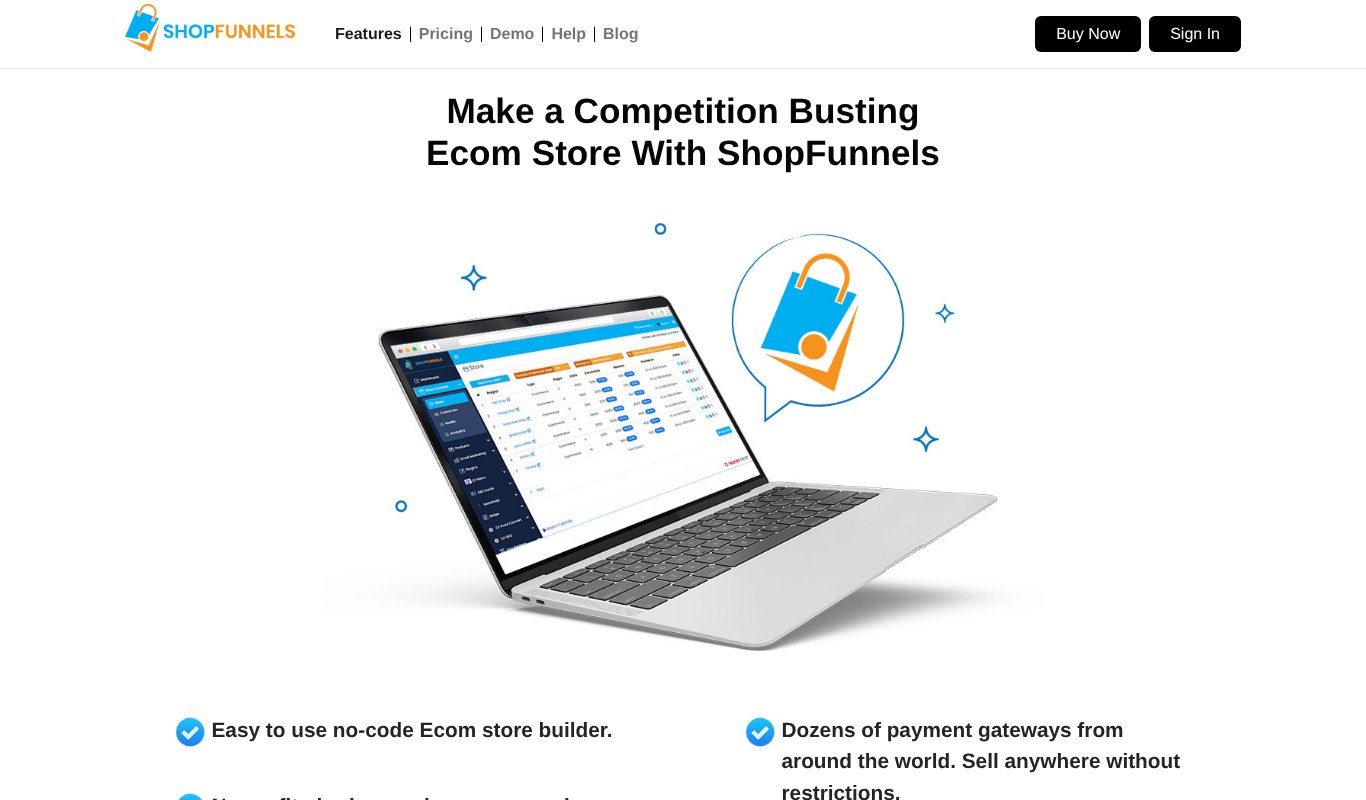
- Easy order and shipping management
- Inventory management with product variants like size and color
- Customized checkout and thank-you pages
- Automatic abandoned cart reminders and built-in email marketing
- Dozens of payment gateways from around the world
- Zapier, Pabbly and Integrately to connect shipping and fulfillment apps
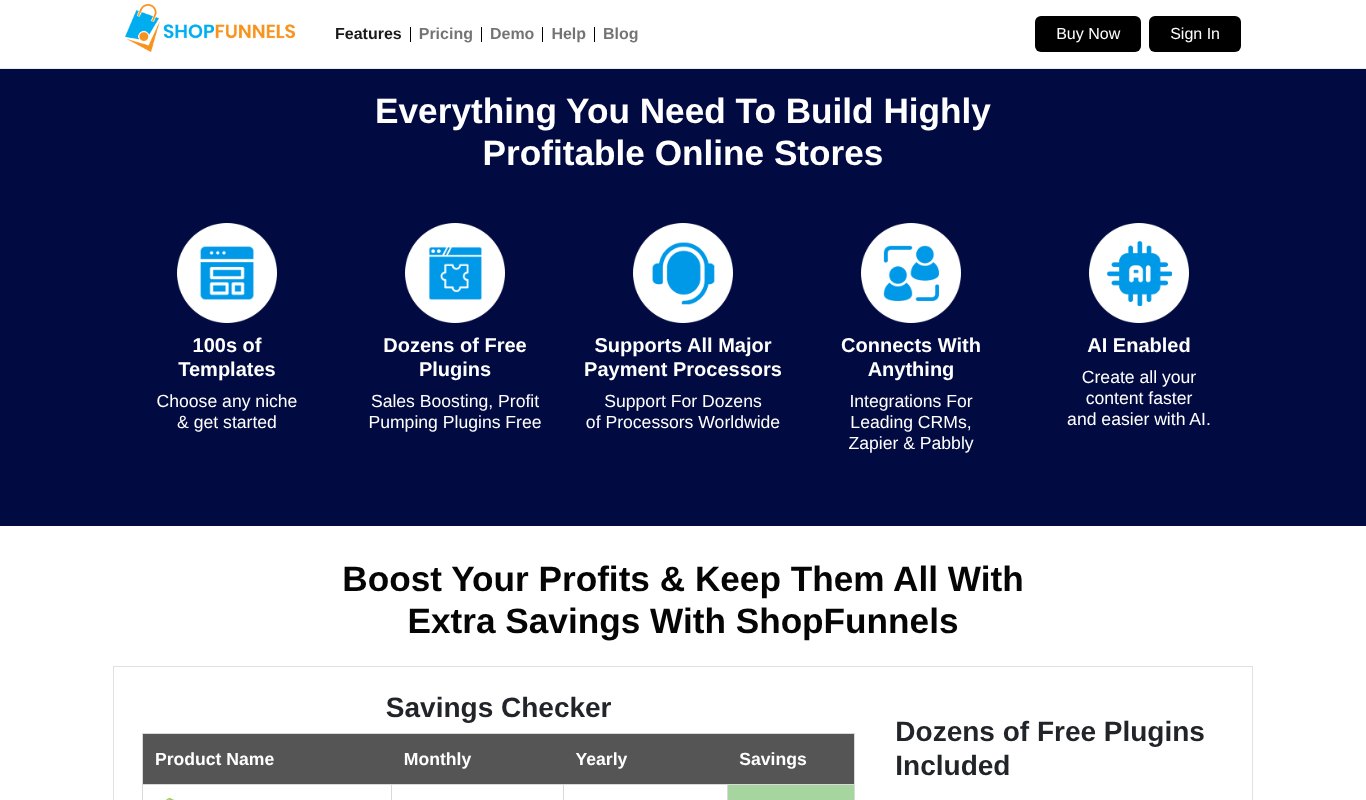
There are no per-order fees and no profit sharing, so your shipping savings stay yours. ShopFunnels costs just $5.58 a month paid yearly ($67 a year), with a 30-day refund.
Frequently Asked Questions
What is the cheapest way to ship for a small online store?
Compare carriers, use the smallest safe packaging, and use shipping software to get discounted rates. For very small items, mailers usually cost less than boxes.
Should I offer free shipping?
If you can, yes, at least above a minimum order amount. It lifts conversions and order size. Just make sure your prices cover the cost.
When should I use a fulfillment partner?
When packing orders takes so much time that you can't work on growing your business, or when you need faster delivery in more regions.
Do I need shipping insurance?
For valuable or fragile items, it's worth it. Many carriers include a small amount of cover by default, and you can add more for expensive orders. For cheap items, it's often simpler to replace the rare lost parcel yourself.
What is a 3PL?
A 3PL, or third-party logistics company, stores your products and handles picking, packing and shipping for you. You send them your stock, connect your store, and they ship each order as it comes in.
How fast should I ship orders?
Aim to ship within one or two business days. Whatever your timing, say it clearly on your site and stick to it.
Final Thoughts
Shipping and fulfillment don't have to be complicated. Pick a fulfillment method that fits your size, choose a clear shipping strategy, pack with care and keep customers updated.
Do that consistently, and your delivery experience becomes a reason people buy from you again.
Ready to build a store that makes all of this easier? Try ShopFunnels and launch in about 10 minutes.