
Launching your store is exciting. Then comes the quiet part, when you wait for orders that don't come.
That's not because your products are bad. It's because nobody knows you exist yet. Marketing fixes that, but only if you have a plan.
Here's a simple 10-step marketing plan for your online store. No jargon, no 50-page documents. Just a clear path you can start this week.
What Is a Marketing Plan?
A marketing plan is a short document that answers five questions. Who are you selling to? What makes you different? Where will you reach them? How much will you spend? How will you know it's working?
That's it. It can fit on two pages. What matters is that you write it down and follow it.
Why Your Store Needs One
Without a plan, most store owners do a bit of everything. A few posts here, an ad there, an email now and then. It feels busy, but nothing builds.
- Focus. You spend time on the few things that actually work.
- Less waste. You stop throwing money at random ads.
- Consistency. Customers see you regularly, which builds trust.
- Learning. You can measure results and improve every month.
The 10 Steps
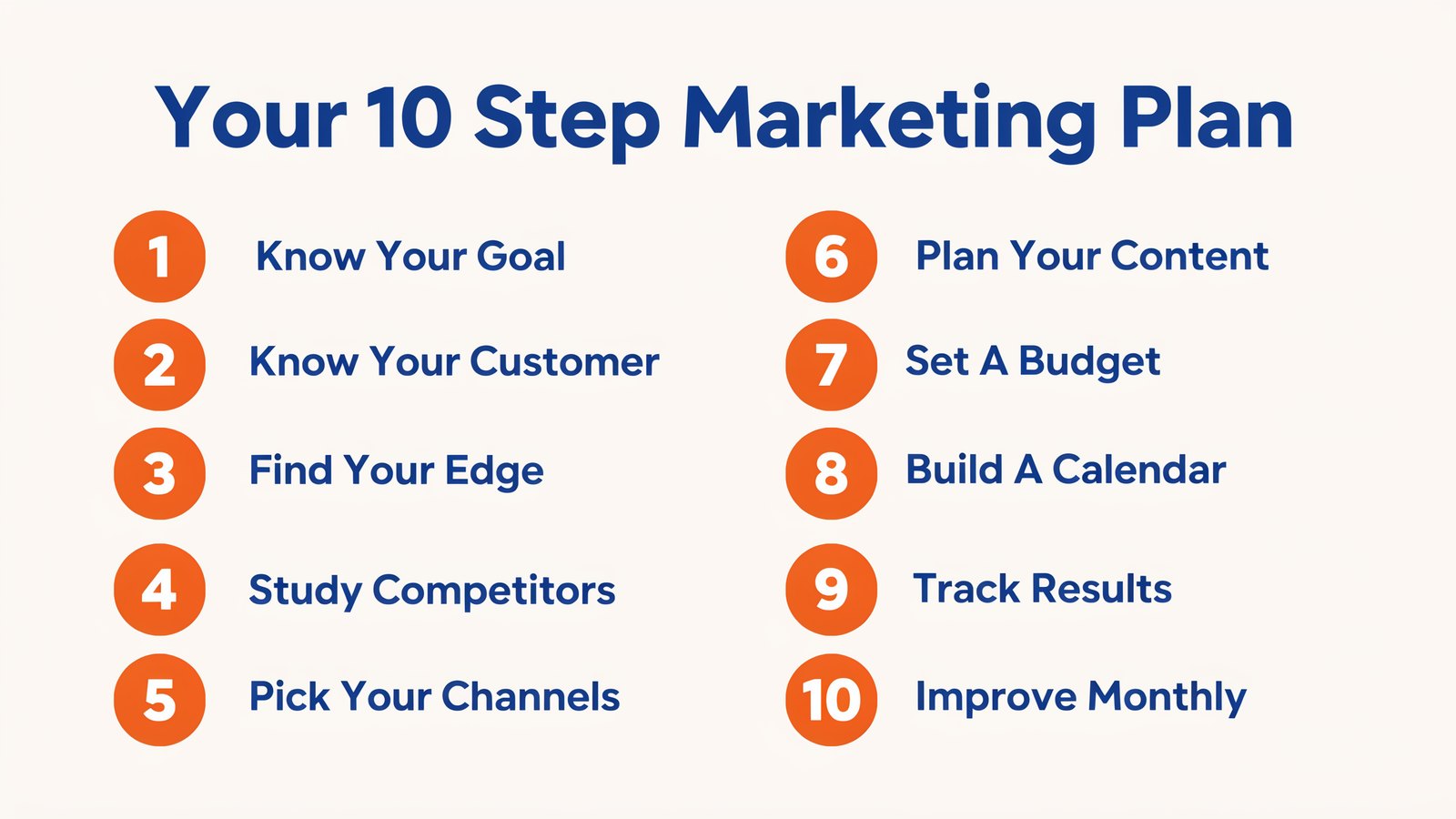
1. Know Your Goal
Start with one clear goal for the next 90 days. Not "get more sales," but something you can measure.
For example, "Reach 100 orders a month by the end of the quarter," or "Build an email list of 1,000 subscribers." A clear goal makes every other decision easier.
2. Know Your Customer
Describe your ideal customer as if they were a real person. How old are they? What do they care about? What problem does your product solve for them? Where do they spend time online?
Talk to your first customers. Read reviews of similar products. Look at questions people ask in groups and forums. Your best marketing ideas come from your customers' own words.
If you sell to more than one kind of customer, write a short profile for each. A gift buyer and someone buying for themselves often need very different messages.
3. Find Your Edge
Why should someone buy from you instead of a big store? Your answer is your edge.
Maybe it's quality, a unique design, faster service, a personal story or a niche you understand better than anyone. Write it in one simple sentence. That sentence should show up on your homepage, your product pages and your social profiles.
4. Study Your Competitors
Pick three to five competitors and study them. What do they sell, and at what prices? What do their customers praise or complain about? Where do they advertise, and what do their ads say?
You're not trying to copy them. You're looking for gaps you can fill. A common complaint about a competitor is often your best selling point.
Sign up for their emails and follow their social accounts too. You'll see their sales calendar, their offers and their tone, all for free.
5. Pick Your Channels
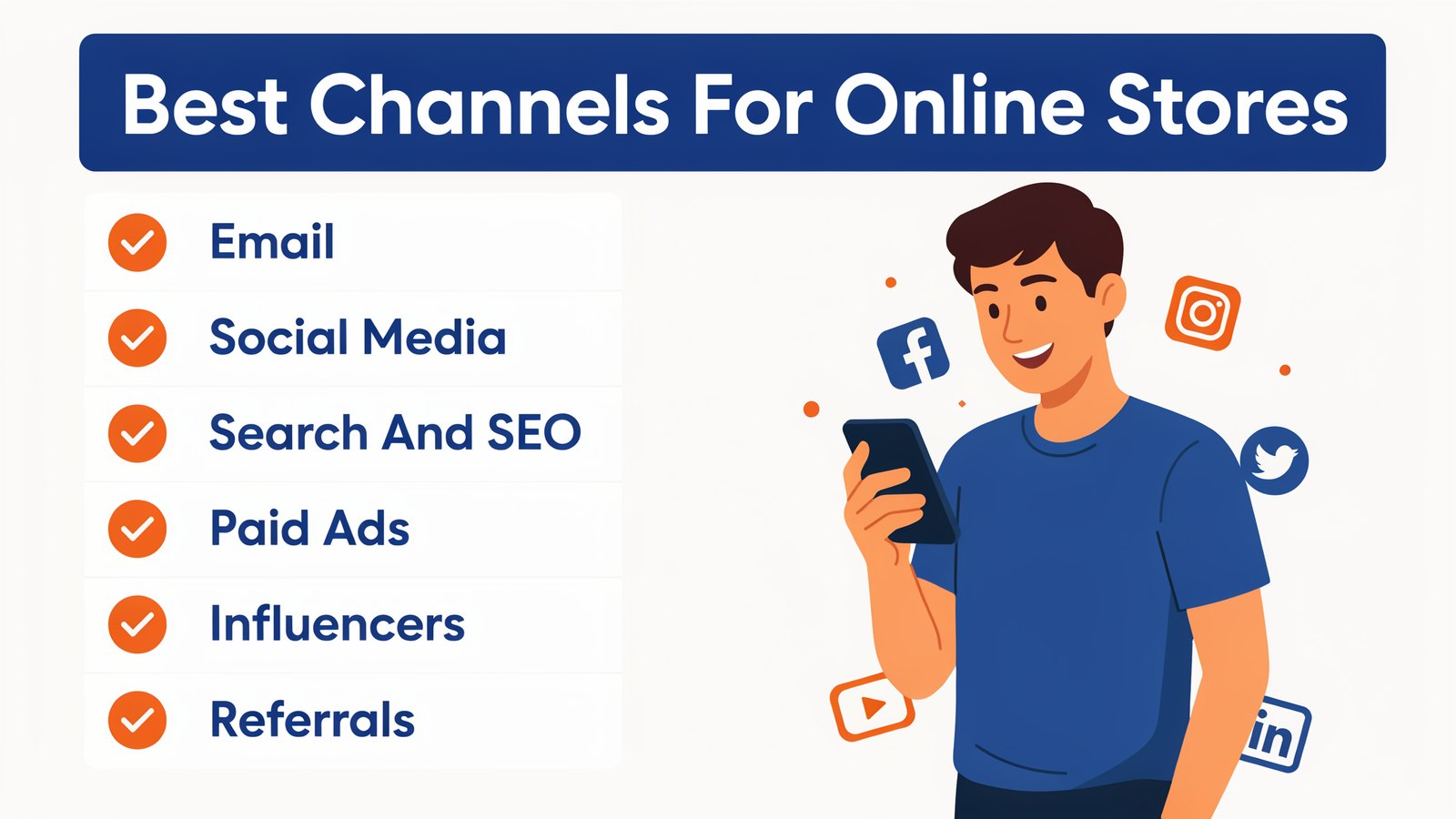
You can't be everywhere. Pick two or three channels where your customers already are, and do them well.
Email is the channel you own, and it usually brings the best return. Start collecting emails from day one.
Social media builds awareness and community. Short videos get the most reach right now.
Search and SEO bring steady, free traffic over time. Good product pages and helpful blog posts both count. Clear content also helps AI search tools recommend your store.
Paid ads bring fast traffic. Start small, test, and only scale what's profitable.
Influencers and creators borrow trust from someone your customers already follow. Micro-creators with smaller, loyal audiences are often the best value.
Referrals turn happy customers into your sales team. A simple "give $10, get $10" offer works well.
6. Plan Your Content
Content is what you'll actually post, send and publish. Plan it around your customer's questions and problems, not just your products.
A simple mix works well. Some posts teach something useful. Some show your product in real life. Some share customer stories. And some make a clear offer.
AI tools can now help you brainstorm ideas, write first drafts and turn one blog post into several social posts and emails. Use them to save time, then add your own voice.
7. Set a Budget
Decide how much money and time you'll put into marketing each month. Be realistic.
Many small stores start by putting a set percentage of revenue into marketing, then adjust once they know what works. If money is tight, lean on free channels like email, social media and SEO, and spend time instead of cash.
Don't forget the cost of tools. A platform that includes email, upsells and analytics in one price saves you from paying for many separate apps.
8. Build a Calendar
A plan without dates is a wish list. Put your marketing on a calendar.
Mark holidays and big shopping days that matter to your customers. Plan launches and sales around them. Then fill in your weekly routine, for example two social posts, one email and one blog post.
Batch your work. Writing a month of posts in one afternoon is much easier than scrambling every day. Scheduling tools can then publish everything for you at the right times.
9. Track Results
Pick a few numbers to watch every week.
- Visitors to your store
- Conversion rate, the share of visitors who buy
- Average order value
- Email sign-ups
- Cost to get each customer, if you run ads
- Repeat customers
Use tracking links so you know which channel each sale came from. Your store's analytics and your ad accounts will show the rest.
10. Improve Every Month
Once a month, sit down with your numbers. What worked? What didn't? Do more of the first and less of the second.
Test one change at a time, like a new headline, a different offer or a new channel. Small, steady improvements add up to big results over a year.
Keep a simple log of what you tried and what happened. After a few months, you'll have your own playbook of what works for your store, which is worth more than any generic advice.
A Simple One-Page Plan Template
| Section | Your Answer |
|---|---|
| 90-day goal | One clear, measurable target |
| Ideal customer | Who they are and what they need |
| Your edge | One sentence on why you |
| Top competitors | 3 to 5 names and their gaps |
| Main channels | 2 or 3 places you will show up |
| Content plan | What you will post and send each week |
| Monthly budget | Money and hours |
| Key dates | Launches, sales and holidays |
| Numbers to track | 3 to 6 key metrics |
| Review day | The day each month you review results |
Fill it in, print it out and stick it on your wall. When you're unsure what to do next, look at it. If a task doesn't move you toward your goal, it can wait.
An Example Plan for a Small Store
Let's make it real. Imagine a small online store selling handmade candles.
Goal. Grow from 30 to 100 orders a month in 90 days.
Customer. Women aged 25 to 45 who love cozy homes, buy gifts often and follow home decor accounts.
Edge. Small-batch, natural soy candles with scents inspired by real places, each with a short story on the label.
Competitors. Two big candle brands and three small makers. Common complaints are weak scent and slow delivery, so the store promises strong scent and shipping within one day.
Channels. Instagram and Facebook Reels, an email list, and gift guides from small creators.
Content. Two Reels a week showing candles in real homes, one email a week with a story and an offer, and a gift guide blog post each month.
Budget. Five hours a week and a small monthly ad budget to boost the best Reels to lookalike audiences.
Calendar. A new scent launch every month, a gift bundle before every major holiday, and a loyalty discount for repeat buyers.
Tracking. Orders, email sign-ups and conversion rate every Friday, and a full review on the first Monday of each month.
Simple, focused and easy to follow. That's what a good plan looks like.
Marketing on a Zero Budget
No money for ads? You can still grow. Lean on the channels that cost time, not cash.
Post short videos regularly. Answer questions in groups and forums where your customers hang out. Write one genuinely helpful blog post a week. Ask every customer for a review and a referral. Collaborate with other small stores that sell to the same people, for example through joint giveaways or bundles.
Free marketing is slower, but it builds an audience that trusts you, and that makes paid marketing much more effective later.
Common Marketing Plan Mistakes
Trying every channel at once. You end up average everywhere and great nowhere.
Ignoring email. Social platforms change their rules. Your email list is yours.
Giving up too early. Most channels need at least a few months to show real results.
Focusing only on new customers. Selling again to past customers is usually cheaper and easier.
Not tracking anything. If you can't measure it, you can't improve it.
What's Changing in 2026
AI is everywhere in marketing. It writes drafts, suggests audiences and even creates product images. The stores that win use AI to move faster, while keeping a human, personal touch.
Shoppers ask AI what to buy. More people use AI assistants to research products. Clear product pages, honest reviews and helpful content make it easier for these tools to mention your store.
Short video keeps growing. If you only add one new thing this year, make it short product videos.
Owned audiences matter more. With ad costs rising, your email list and loyal customers are your most valuable marketing assets.
Make Your Store Ready for Marketing
All the marketing in the world won't help if your store can't turn visitors into buyers. Your store should capture emails, recover abandoned carts and make it easy to buy more.
ShopFunnels is our own store builder, made by Teknikforce, and it puts these marketing tools in one place.
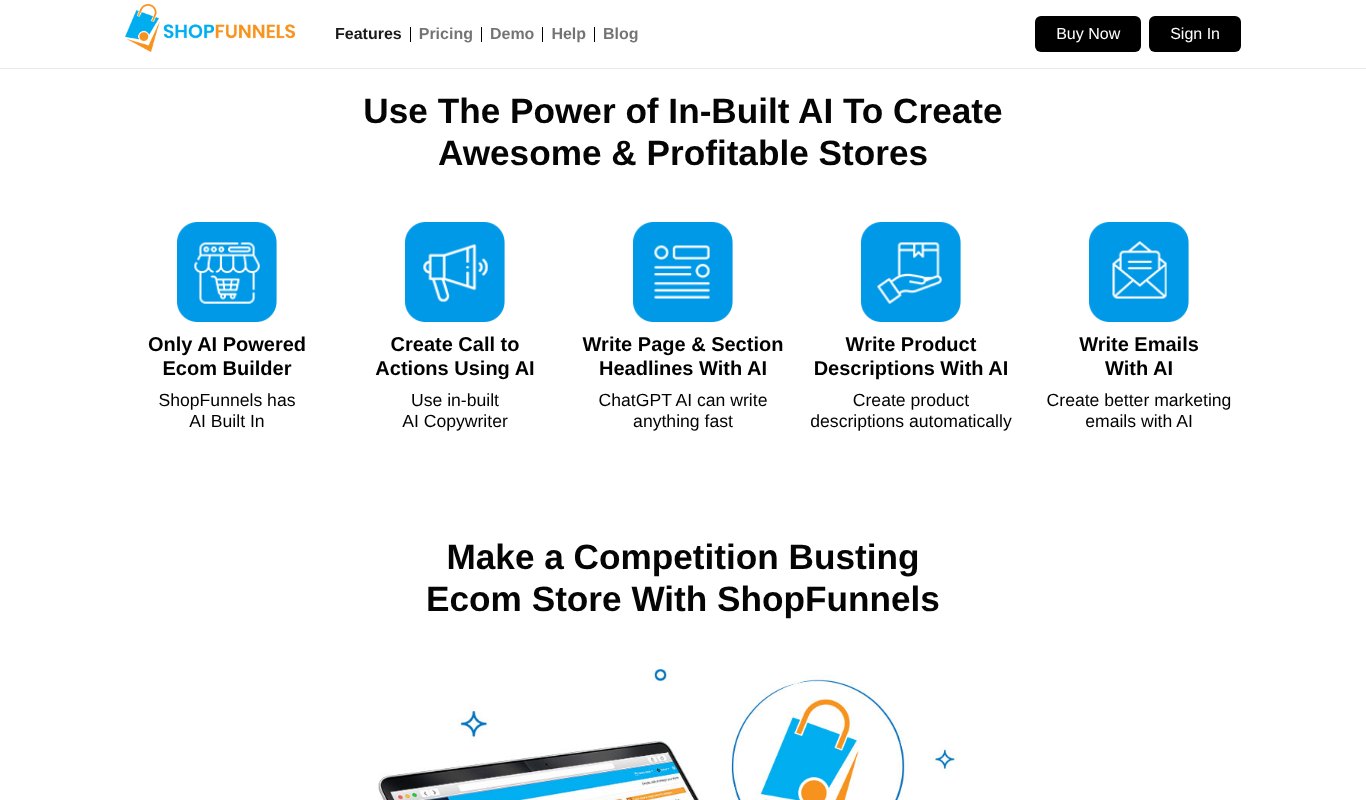
- Built-in email marketing and abandoned cart reminders
- AI that writes product descriptions, headlines, calls to action and emails
- Upsells, downsells, order bumps and cross-sells
- Coupons and discount codes for launches and sales
- A/B split testing and built-in analytics
- Full on-page SEO controls and support for all tracking pixels
- Zapier, Pabbly, Integrately and CRM integrations
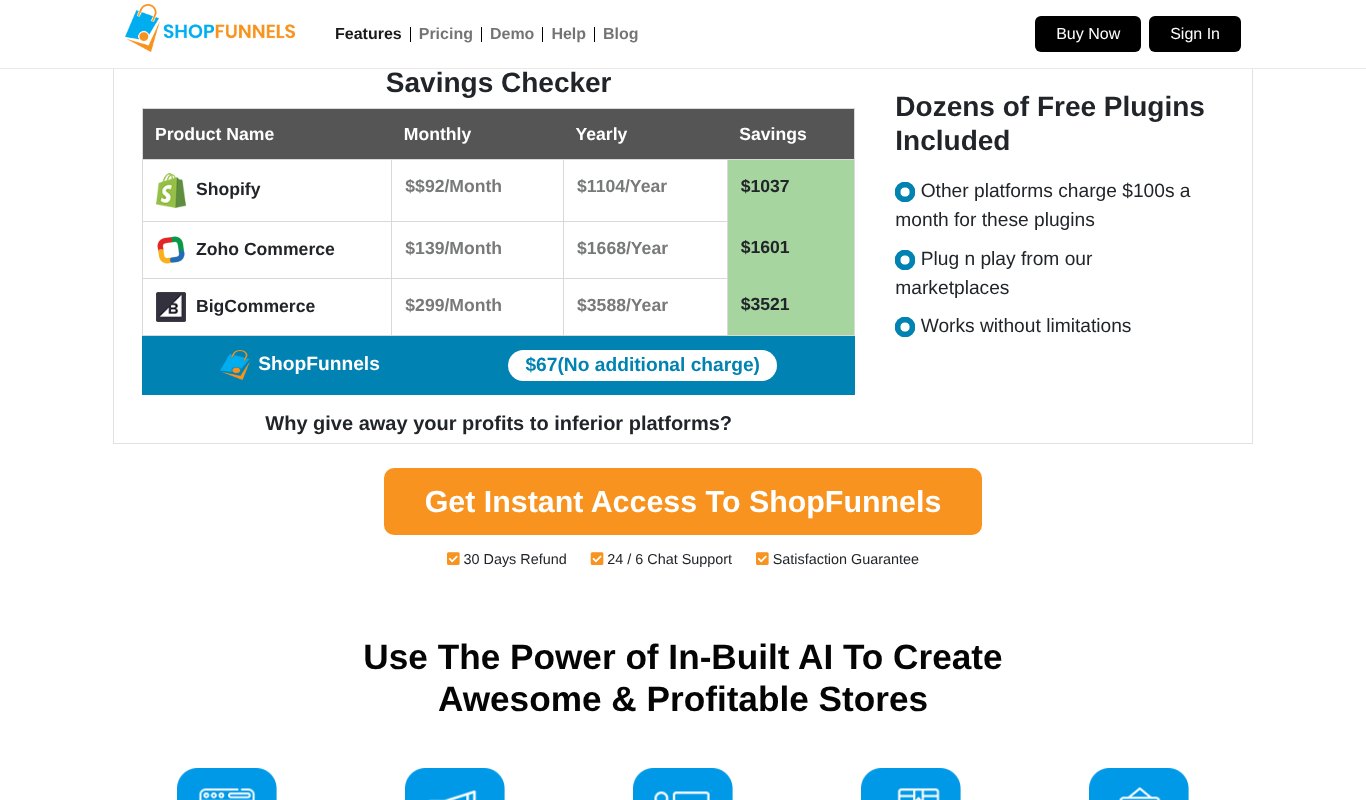
It also includes 20+ free plugins for social proof, reviews and exit pop-ups. There are no per-order fees, and it costs just $5.58 a month paid yearly ($67 a year), with a 30-day refund.
Frequently Asked Questions
How long should a marketing plan be?
For a small online store, one or two pages is plenty. The goal is clarity, not length.
How much should I spend on marketing?
It depends on your margins and goals. Start with what you can comfortably afford, track your results, and increase spending only on channels that make a profit.
What is the best marketing channel for a new online store?
For most new stores, email combined with one social platform where your customers spend time. Both are low cost and build an audience you can sell to again and again.
Do I need a marketing agency?
Not at the start. Most small stores do better learning the basics themselves first. Once you know which channels work, an agency or freelancer can help you scale them.
How often should I update my marketing plan?
Review your numbers every month and refresh the whole plan every quarter.
Final Thoughts
Marketing doesn't have to be complicated. Set a goal, know your customer, pick a few channels, show up consistently and keep improving.
Write your one-page plan this week and follow it for 90 days. You'll be surprised how much changes.
And if your store isn't built to turn visitors into buyers yet, try ShopFunnels and get the marketing tools you need built in.