
Picture an online store with nice products, good photos and decent traffic. Sales? Flat.
Look closer and the reasons are usually boring. The checkout makes people create an account. Shipping costs only show up on the last screen. And on a phone, the product page takes so long to load that shoppers give up.
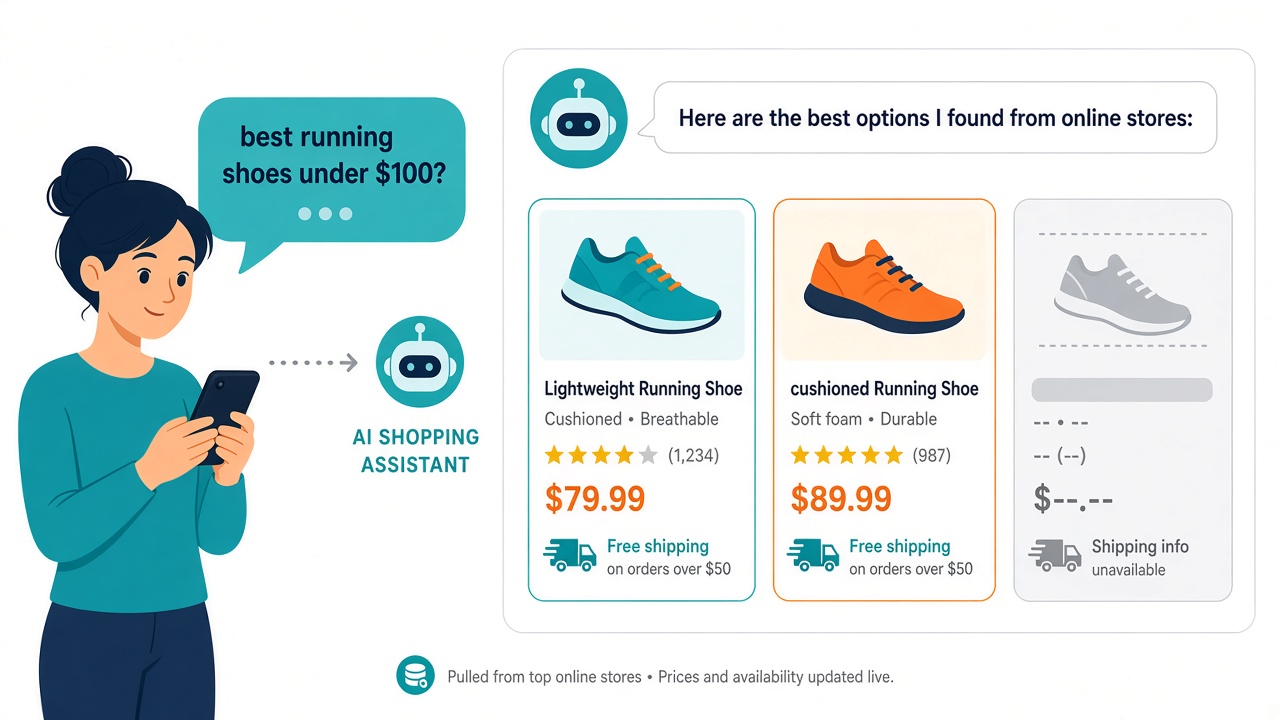
I see this pattern all the time. Here's the thing: the way people shop has changed a lot since I first wrote this post in 2023. Shoppers now ask AI assistants what to buy. Most of them pay on their phones. And they have zero patience for a clunky checkout.
In this updated 2027 guide I'll walk you through the 10 mistakes I see most often, what each one costs you, and exactly how to fix it. Where our own store builder, ShopFunnels, genuinely helps, I'll say so.
What changed since 2023
Three shifts matter more than anything else.
1. AI is now part of the shopping journey. Adobe Analytics found that traffic to US retail sites from generative AI tools rose 693.4% year over year during the 2025 holiday season (Adobe, Jan 2026). Adobe notes the base is still modest, but it's growing fast. If an AI assistant can't understand your product pages, you don't get recommended.
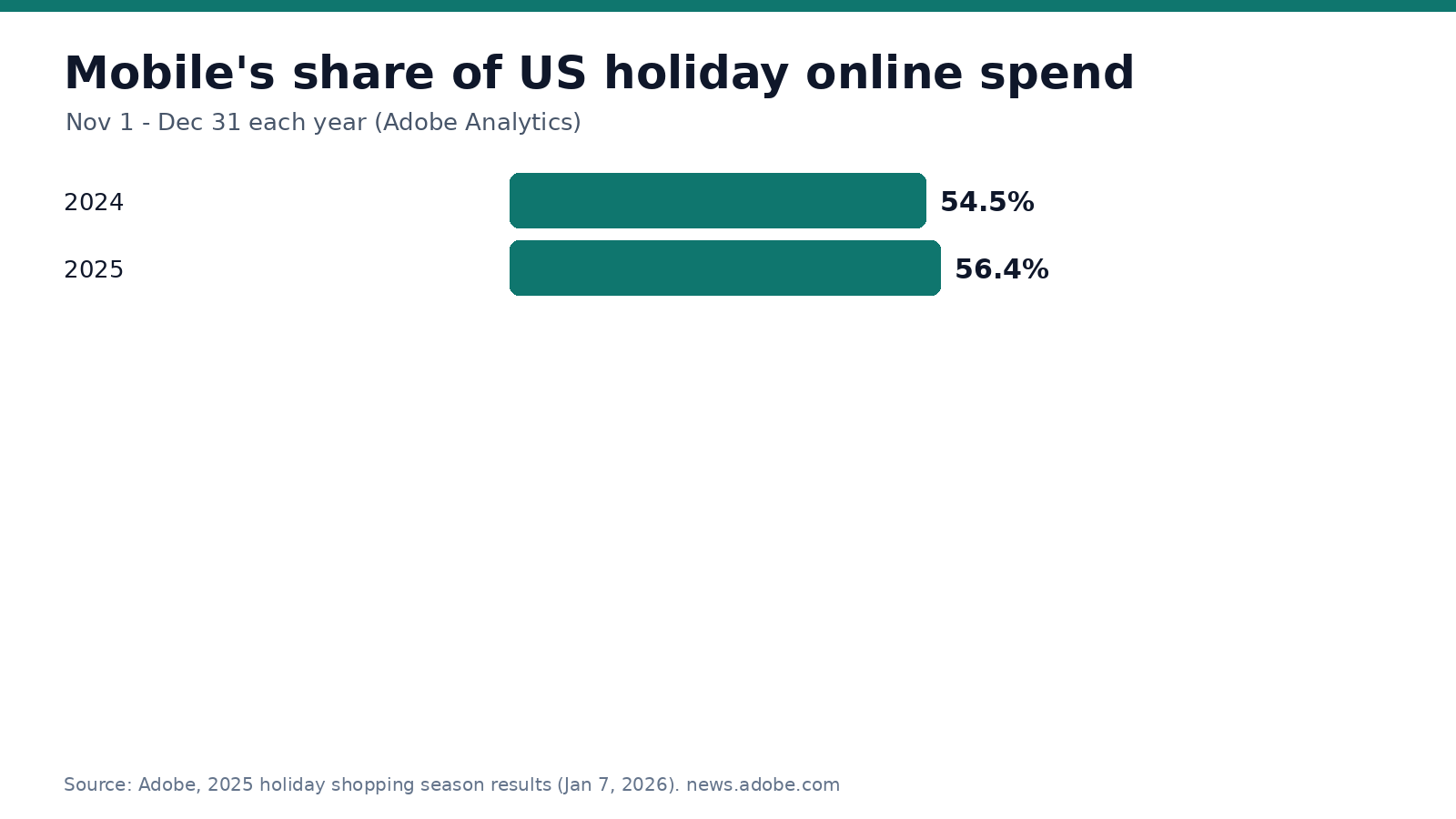
2. Mobile is where the money is. Smartphones drove 56.4% of US online holiday spend in 2025, up from 54.5% the year before (Adobe).
3. Checkout friction is still the silent killer. Baymard Institute puts the average documented cart abandonment rate at 70.22% (Baymard). Some of that is people just browsing. A lot of it is fixable.
Quick table: the 10 mistakes at a glance
| # | Mistake | What it costs you | The fix |
|---|---|---|---|
| 1 | Product pages AI assistants and Google can't read | You don't show up when shoppers ask AI or search | Full product details, specs, prices, shipping and FAQs in plain text |
| 2 | Slow mobile store | Shoppers bounce before the page loads | Compress images, cut scripts, test Core Web Vitals on a phone |
| 3 | Forced accounts and long checkout forms | 18% of shoppers have abandoned over forced accounts (Baymard) | Guest checkout first, one page, fewer fields |
| 4 | Surprise costs at the end | 40% abandon over extra costs (Baymard), the #1 reason | Show shipping, tax and total early |
| 5 | Thin descriptions and weak photos | Low trust, more returns | Multiple photos, real specs, benefit-led copy |
| 6 | No reviews (or fake ones) | Lost trust; fake reviews now carry FTC penalties | Collect and show genuine reviews with photos |
| 7 | Hidden returns policy and contact details | 19% don't trust the site with their card (Baymard) | Clear returns, real contact page, trust signals |
| 8 | No upsells or order bumps | Lower average order value | Relevant bumps, upsells and bundles at checkout |
| 9 | Ignoring abandoned carts | Lost sales you already paid to attract | Automated cart reminders by email |
| 10 | Treating every sale as one-off | High ad costs, no repeat revenue | Email offers, coupons and a customer area |
Now let's go through them one by one.
1. Product pages AI assistants and Google can't read
In 2023 this mistake didn't exist. Today it might be the most expensive one on the list.
When a shopper asks an AI assistant for "a waterproof hiking backpack under $80 that ships to Canada," the assistant pulls from pages it can read and trust. If your price is buried in an image, your specs are vague, and your shipping policy is a PDF, you simply don't make the shortlist.
The fix:
- Write specs in plain text. Size, materials, weight, compatibility, care instructions.
- Show the price, stock status and shipping info on the product page itself.
- Add a short FAQ to key product pages. "Is it machine washable?" "Does it ship internationally?"
- Keep on-page SEO tidy. Unique titles, meta descriptions and descriptive image alt text.
ShopFunnels' sales page lists full on-page SEO support, and its built-in AI writer can draft product descriptions so you're not staring at a blank box for every SKU. Always edit the draft so the facts are right.
2. A slow mobile store
You test your store on a fast laptop on office Wi-Fi. Your customers open it on a phone, on mobile data, on a train.
Speed matters. In Deloitte's "Milliseconds Make Millions" study for Google, a 0.1-second improvement in mobile site speed was linked to an 8.4% increase in retail conversions (Deloitte/Google, 2020).
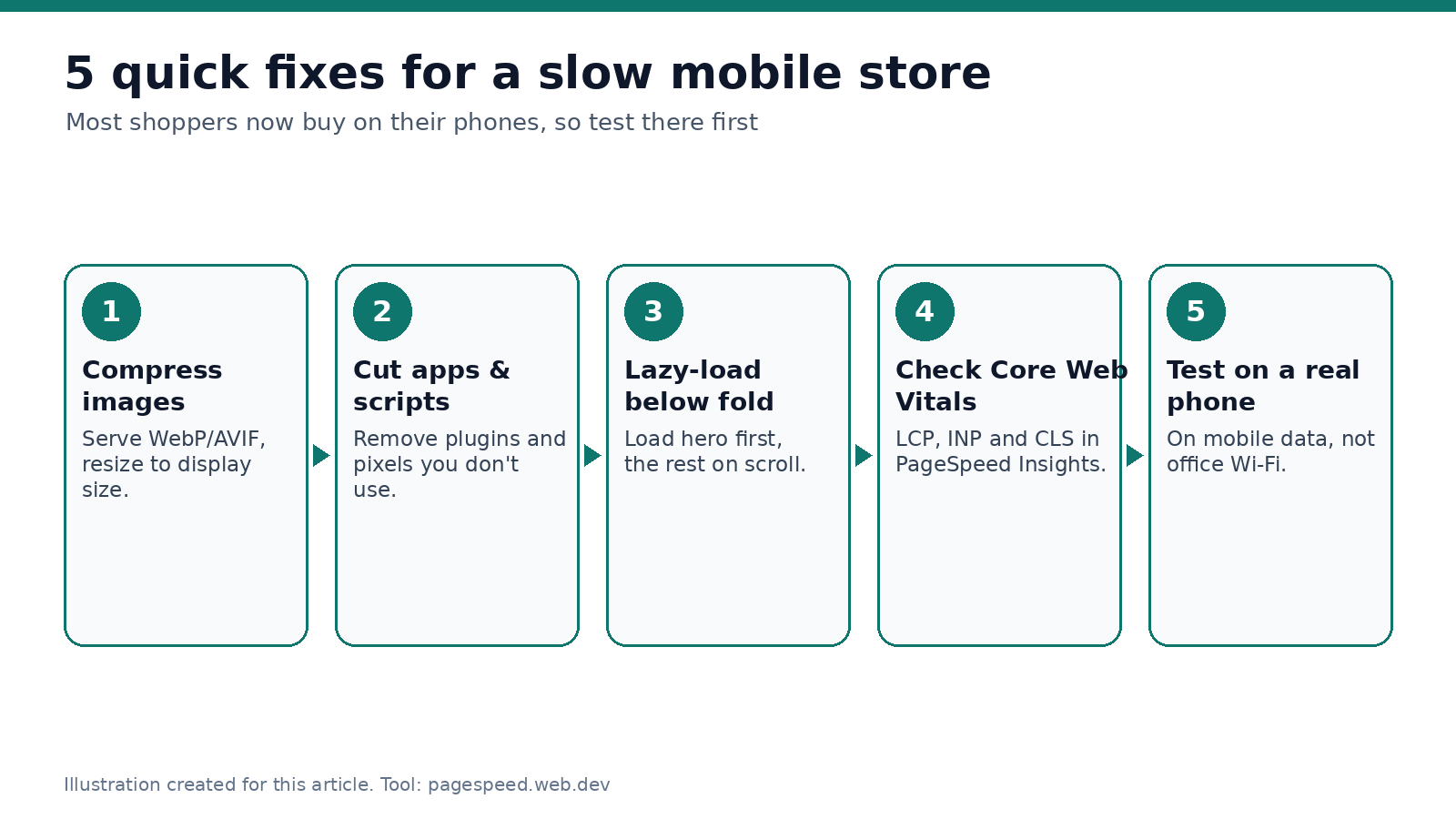
The fix:
- Compress and resize images. Serve modern formats at the size they're actually displayed.
- Remove apps, plugins and tracking scripts you no longer use. Each one adds weight.
- Check Core Web Vitals (LCP, INP and CLS) in PageSpeed Insights.
- Test on a real phone on mobile data before every big campaign.
ShopFunnels advertises ultra-fast page loads, AMP technology and fully responsive design, which gives you a good starting point. You still need to keep your images lean.
3. Forced accounts and long checkout forms
This was a problem in 2023 and it's still a problem now.
Baymard's research found that 18% of US shoppers have abandoned an order because the site wanted them to create an account, and 17% quit because checkout was too long or complicated (Baymard). Baymard also found an ideal checkout can be cut to about 12 form elements, while the average US checkout shows around 23 (Baymard).
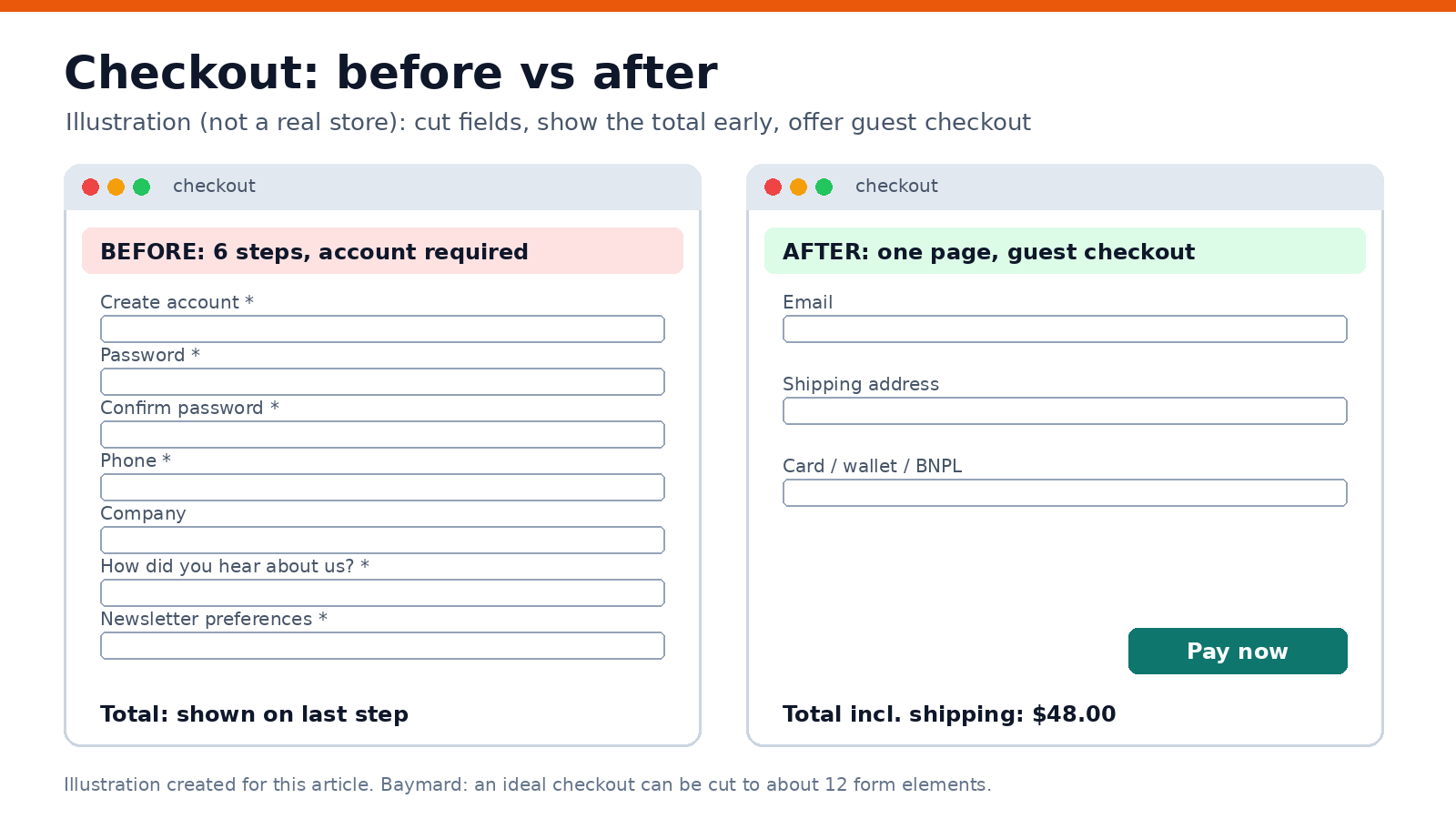
The fix:
- Make guest checkout the most obvious option.
- Offer account creation after the purchase, on the thank-you page.
- Cut every field you don't need. Do you really need a company name or birthday?
- Offer the payment methods your buyers use: cards, wallets and, where it fits, buy-now-pay-later.
ShopFunnels gives you a customized checkout and thank-you page, plus support for dozens of payment gateways worldwide, so you can build a short checkout that fits your market.
4. Surprise costs at the end
Nothing kills a sale faster than a total that jumps on the last screen.
Extra costs (shipping, tax and fees) are the #1 reason for abandonment, cited by 40% of shoppers once you set aside people who were just browsing (Baymard). Another 12% left because they couldn't see the total cost up front.
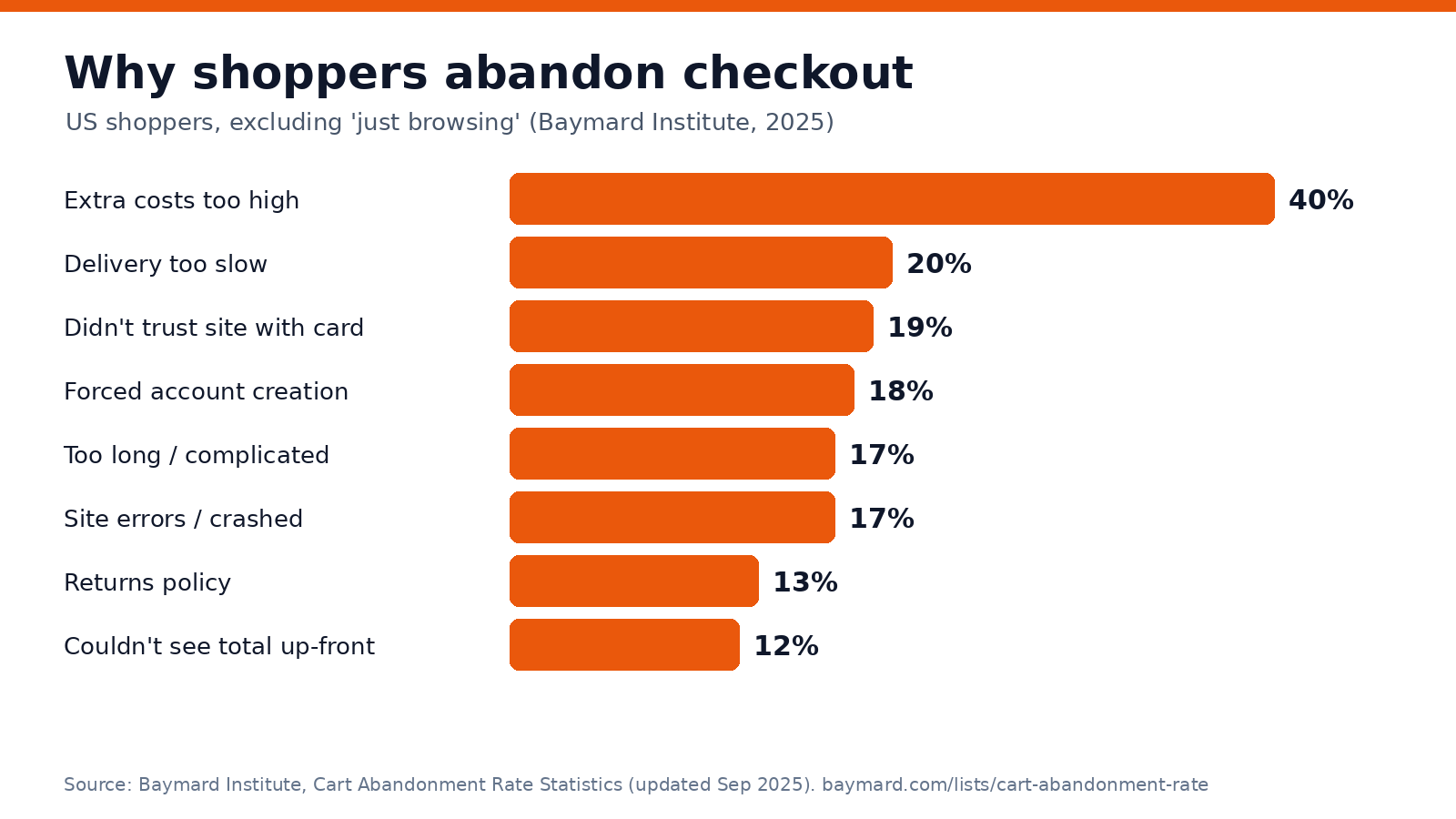
The fix:
- Show shipping costs on the product page or with a simple calculator in the cart.
- Use a free-shipping threshold ("Free shipping over $50") and show progress toward it.
- Never add a fee at the last step that wasn't mentioned earlier.
5. Thin descriptions and weak photos
Shoppers can't touch your product. Your photos and copy have to do the work.
One blurry photo and a two-line description won't cut it. You'll lose the sale, or worse, make the sale and get the return.
The fix:
- Show 4-6 photos per product: front, back, detail, scale and in use.
- Lead with benefits, then back them up with specs.
- Answer objections in the copy: sizing, materials, what's in the box.
- Use product variants (size, color) so people don't have to guess.
ShopFunnels supports product variants like color and size, and its AI writer can draft descriptions and headlines that you then polish.
6. No reviews, or fake ones
Social proof still sells. But in 2027 it has to be real.
In the US, the FTC's rule banning fake reviews and testimonials took effect in October 2024, and it allows civil penalties against violators (FTC). Buying or inventing reviews isn't a shortcut anymore. It's a liability.
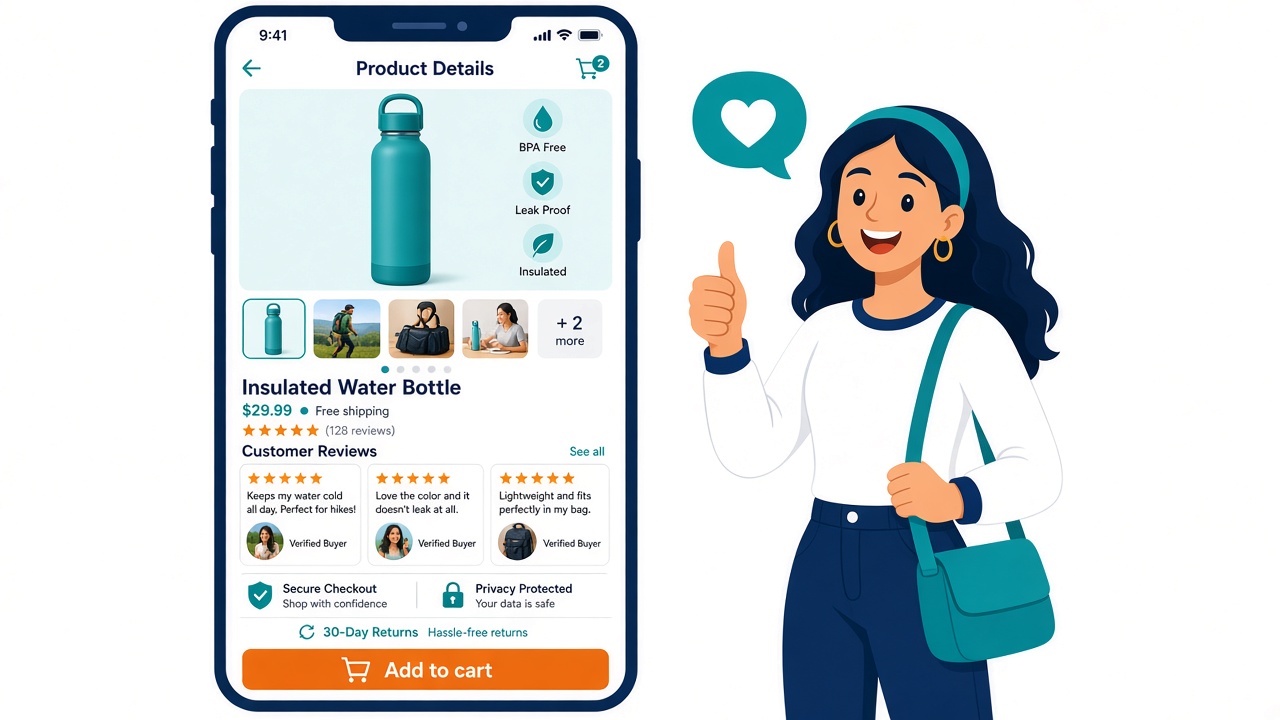
The fix:
- Ask every buyer for a review a few days after delivery.
- Encourage photo reviews. They're more convincing than text.
- Show the critical reviews too. A perfect 5.0 looks suspicious.
7. A hidden returns policy and no real contact details
19% of shoppers have abandoned because they didn't trust the site with their card details, and 13% because the returns policy wasn't good enough (Baymard).
New stores suffer most here. Nobody knows who you are yet.
The fix:
- Link your returns policy right next to the "Add to cart" button.
- Publish a real contact page with an email, a phone number if you can, and a business address.
- Show recognizable payment options and a secure-checkout note on the checkout page.
- Reply fast. A human answer in an hour beats a bot loop.
8. Not upselling
Back in 2023 I wrote that some store owners avoid upselling because it feels pushy. I still hear that.
But a relevant offer isn't pushy. Phone case with the phone? Refill pack with the starter kit? That's helpful.
The fix:
- Add a one-click order bump on the checkout page for a small, related add-on.
- Offer a post-purchase upsell on the thank-you page.
- Bundle products that people already buy together.
- Split-test your offers so you're not guessing.
This is where ShopFunnels shines. It has upsells, downsells, order bumps and cross-sells built in, along with A/B split testing and built-in analytics. On most hosted platforms you'd pay for extra apps to get the same thing.
9. Ignoring abandoned carts
Remember that 70% abandonment rate? Some of those shoppers wanted to buy. They got distracted.
If you're not sending cart reminders, you're leaving money with people who already raised their hand.
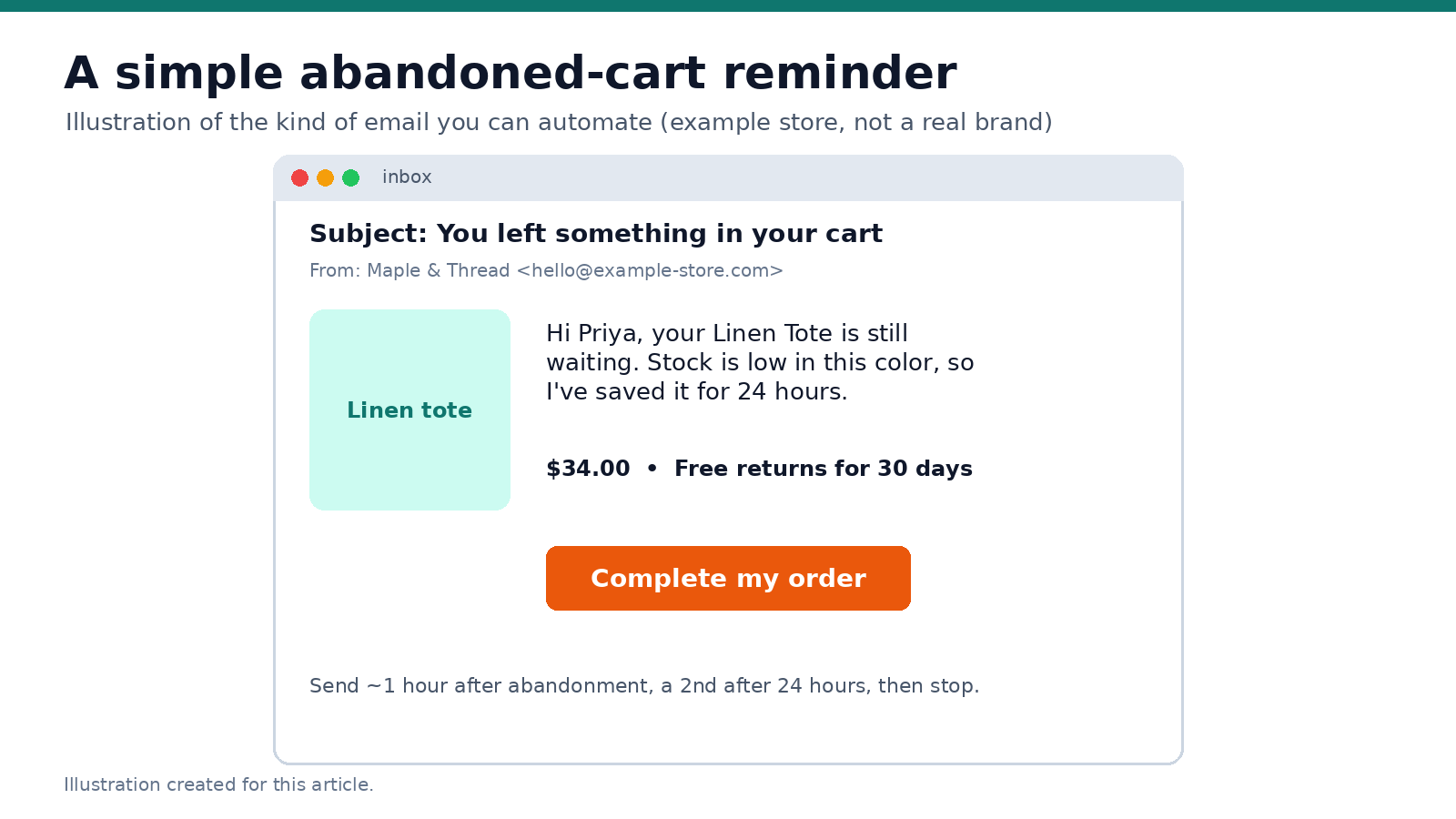
The fix:
- Send the first reminder about an hour after abandonment, a second one about a day later, then stop.
- Show the product photo and price in the email.
- Keep the discount for the second email, if you use one at all.
ShopFunnels has automated abandoned-cart reminders and email marketing built in, so you don't need a separate email tool just to win back carts. If you want more ideas, read our guide to ecommerce email practices.
10. Treating every sale as a one-off
The original version of this post said "sell for a longer time frame." I'd put it more bluntly now: if you only ever chase new customers, ads will eat your margin.
A customer who's already bought from you is the easiest sale you'll ever make.
The fix:
- Email past customers with useful content, new arrivals and occasional offers.
- Create coupon codes for repeat buyers and birthdays.
- Give customers an account area to see past orders and reorder in a click.
- Offer subscriptions or memberships for products people buy again and again.
ShopFunnels includes built-in email marketing, coupons and discount codes, a customer area where buyers can manage existing orders, and membership features.
Your 10-point store audit
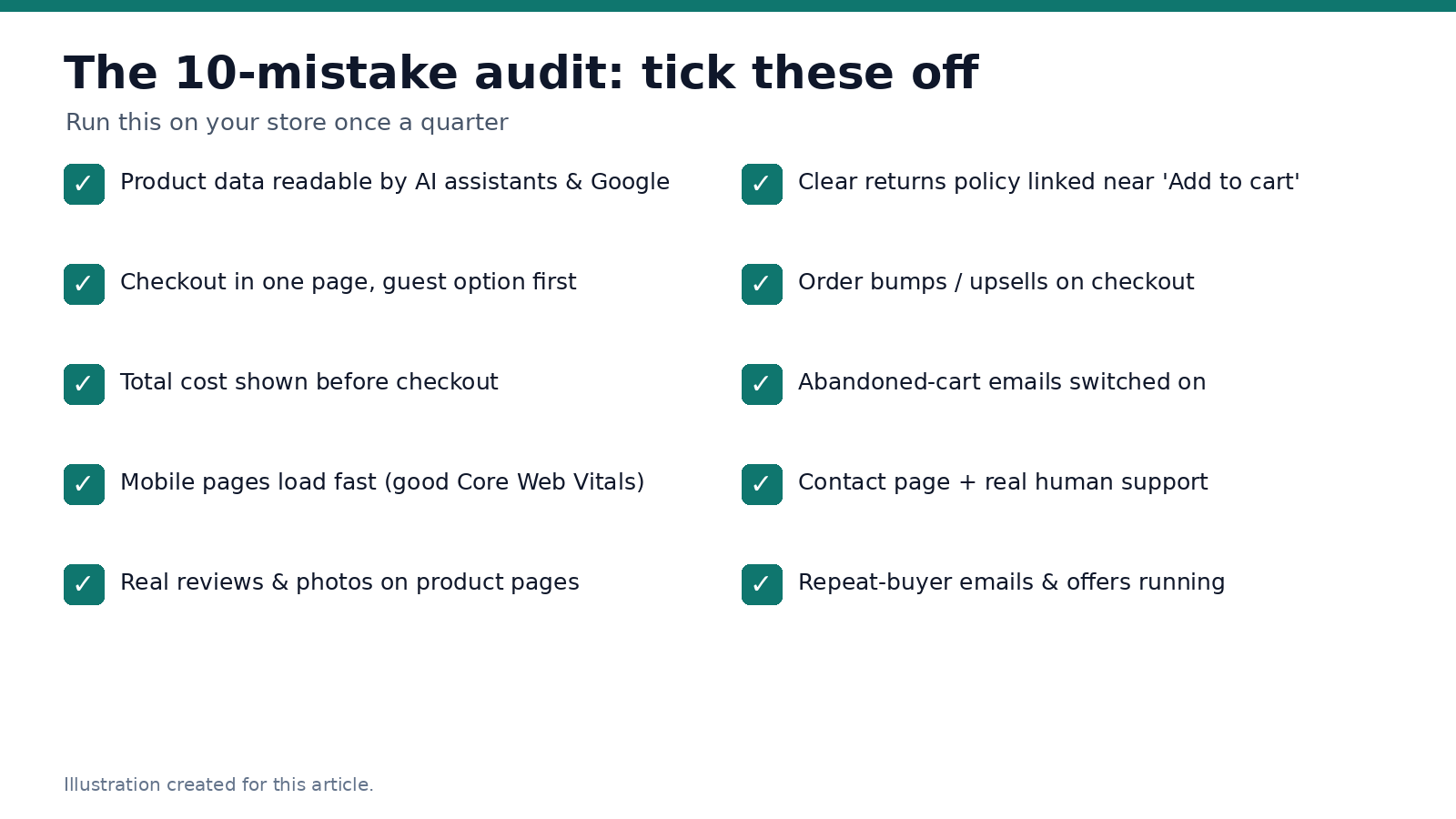
Here's the whole list as a checklist. I'd run through it once a quarter, and before any big sale.
How ShopFunnels helps you fix these mistakes
I'll be upfront: ShopFunnels is our product at Teknikforce. I built this list from what I see across real stores, and I've tied each fix to a ShopFunnels feature only where it genuinely applies. Here's what you get, according to the ShopFunnels sales page:
- Checkout control: customized checkout and thank-you pages, dozens of payment gateways worldwide.
- Higher order values: upsells, downsells, order bumps, cross-sells and A/B split testing.
- Cart recovery and repeat sales: abandoned-cart reminders, built-in email marketing, coupons and a customer area.
- Speed and SEO: ultra-fast page loads, AMP, responsive design and on-page SEO features.
- AI built in: write product descriptions, headlines, calls to action and emails with AI.
- Your store, your rules: no profit-sharing or per-order charges, no limits on products, and it can run on your own domain or alongside your existing blog.
- 20+ free plugins and hundreds of templates.
Pricing: ShopFunnels starts at $27/month for the Elite monthly plan. The Elite yearly plan is $97/year, and the sales page shows a coupon (SHOP30) for $30 off. Pro plans for up to 5 websites are $47/month or $127/year. Every plan has a 30-day money-back guarantee and 24/6 chat support.
Compare that with stacking a hosted platform subscription and several paid apps for upsells, reviews and cart recovery, and the savings add up quickly.
Final thoughts
Most stores don't fail because of one huge mistake. They leak sales through ten small ones.
The good news? Every fix on this list is something you can do this month. Start with the money leaks closest to the sale: surprise costs, checkout friction and abandoned carts. Then work outward to speed, product pages and retention.
If you're starting from scratch, our step-by-step guide on how to build an online store from scratch is a good next read.
Frequently asked questions
What is the most common ecommerce mistake in 2027?
Surprise costs at checkout. Baymard found extra costs like shipping, tax and fees are the top reason shoppers abandon a cart, cited by 40% of those who weren't just browsing.
What is a good cart abandonment rate?
The documented average is about 70%, according to Baymard. Don't chase zero. Track your own rate and aim to bring it down steadily with shorter checkouts, clearer costs and cart reminders.
How do I make my store show up in AI shopping assistants?
Make your product pages easy to read: plain-text specs, visible prices and stock, clear shipping and returns, and short FAQs. Keep your on-page SEO tidy, because AI tools tend to rely on the same well-structured pages search engines do.
Do I need an app for abandoned cart emails?
On many hosted platforms, yes. ShopFunnels has abandoned-cart reminders and email marketing built in, so you don't need a separate tool for it.
How fast should my online store load?
As fast as you can make it on a phone. Use Google's PageSpeed Insights and aim for "good" Core Web Vitals scores. Even small gains matter: Deloitte linked a 0.1-second mobile speed improvement to an 8.4% lift in retail conversions.
Is upselling bad for customer experience?
Not if the offer is relevant. A small, related order bump or a sensible bundle usually helps the customer. Test it so you know it's working.
Can I add a store to my existing website or blog?
With ShopFunnels, yes. Its sales page says it can be installed on your existing domain, blog or site, in a folder or on a subdomain.
Ready to fix the leaks?
Build a faster store with a short checkout, order bumps, cart reminders and email built in. No per-order fees, and a 30-day money-back guarantee.