
Business buyers don't want to call a sales rep, wait for a price list and send a fax. They want to log in, see their price, and reorder in two minutes.
That's why more wholesalers, manufacturers and distributors are moving their sales online. A good B2B store takes orders around the clock, cuts down on back-and-forth emails and makes repeat buying easy.
The hard part is choosing the platform. Some are built for huge companies with ERP systems and six-figure budgets. Others are simple, cheap and quick to launch.
We compared the 7 best B2B ecommerce platforms for 2027, checked their current prices, and sorted out who each one really suits.
What Makes B2B Ecommerce Different
Selling to businesses has a few needs that a normal online shop doesn't.
- Custom prices. Different customers often pay different prices, based on volume or contract.
- Bulk orders. Buyers order by the case or pallet, often with minimum quantities.
- Fast reorders. Most B2B orders are repeat orders, so reordering must be quick.
- Quotes and approvals. Larger buyers may need a quote, or a manager has to approve the order.
- Payment terms. Many businesses pay by invoice, with 30 or 60 day terms.
- Several buyers per account. One company may have many people ordering.
Not every seller needs all of these. A small wholesaler with fifty customers needs far less than a manufacturer with thousands of accounts. Keep that in mind as you read the list.
Quick Price Comparison
| Platform | Starting Price | Best For |
|---|---|---|
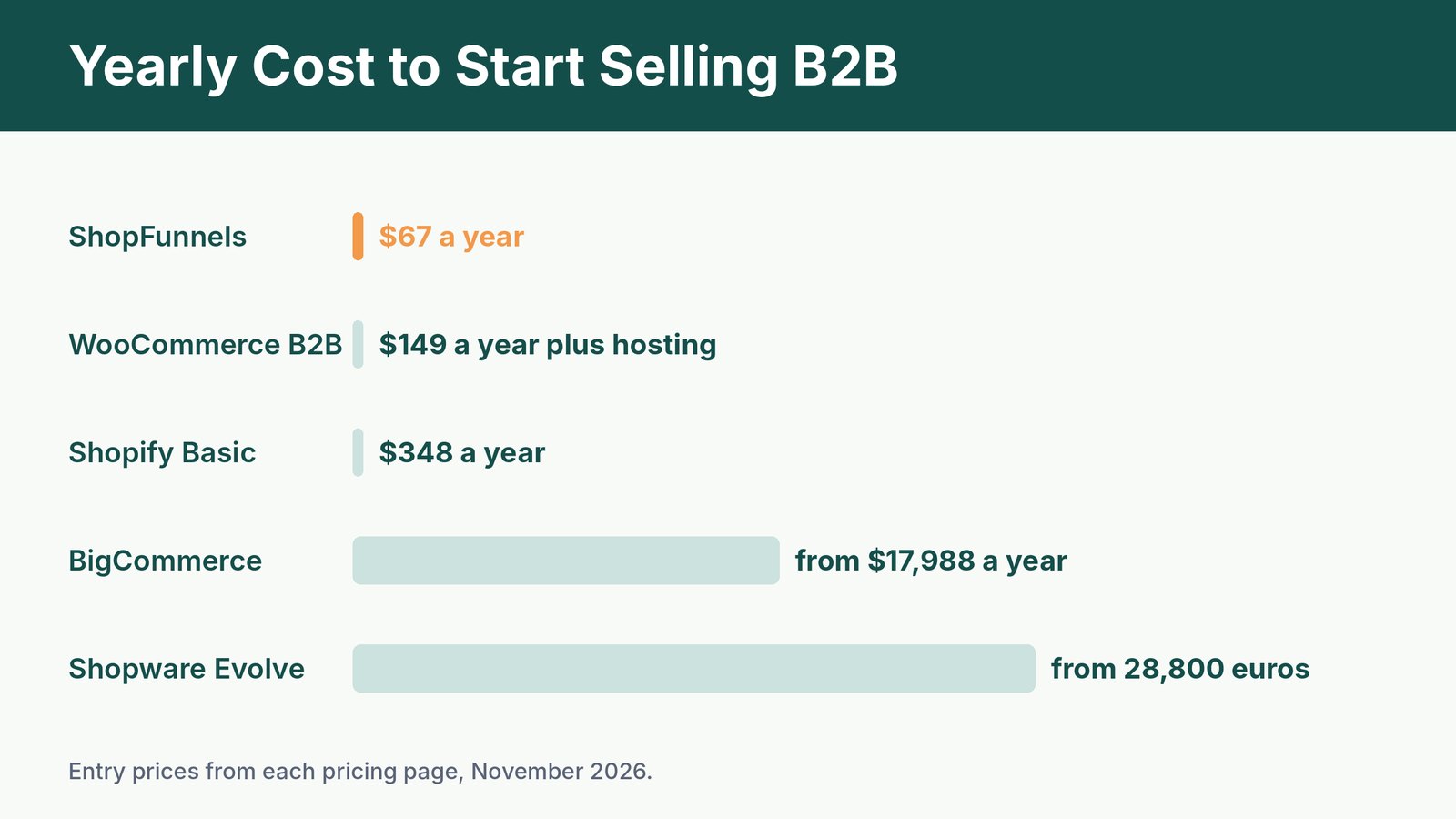
| ShopFunnels | $5.58 a month paid yearly | Small wholesalers who want a low-cost store with funnels |
| Shopify | $29 a month paid yearly | Brands that sell B2B and direct to consumers |
| BigCommerce | From $1,499 a month for enterprise | Mid-size and large B2B sellers |
| WooCommerce | Free, plus $149 a year for B2B add-on | WordPress users who want full control |
| Shopware | Free open source, Evolve from 2,400 euros a month | European sellers with complex B2B needs |
| Sana Commerce | Custom quote | Manufacturers running SAP or Microsoft Dynamics |
| PrestaShop | Free open source | Developers who want a free, flexible base |
1. ShopFunnels
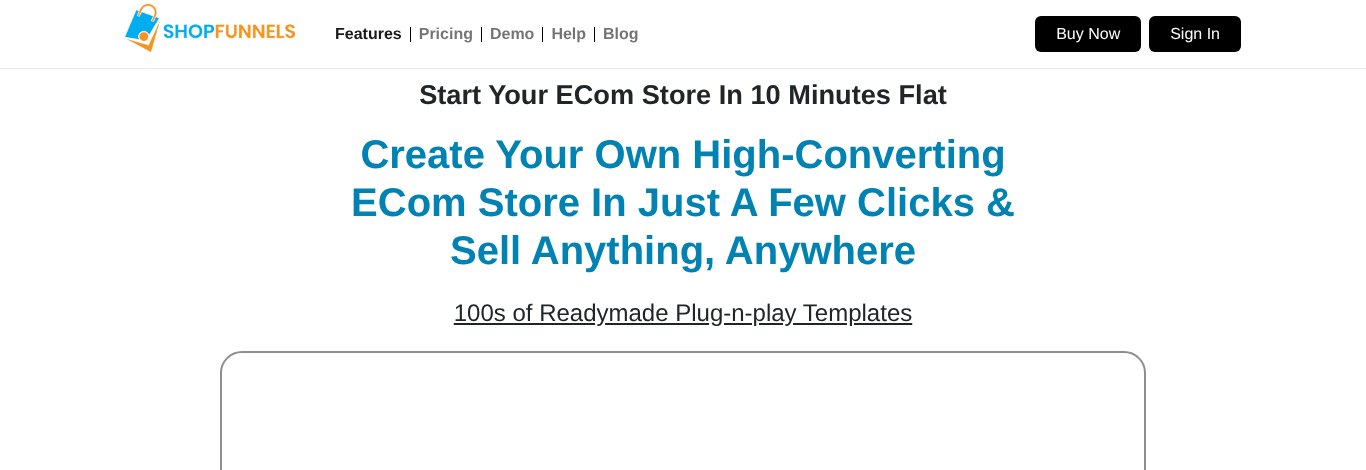
ShopFunnels is a no-code store builder that lets you launch a full ecommerce store in minutes. You pick from hundreds of ready templates, add your products and start taking orders, without hiring a developer.
For smaller B2B sellers, the big draw is the cost. There are no profit-sharing fees, no per-order fees and no limits on products or orders. That matters when you sell in volume, because a small cut on every order adds up fast.
You also get sales tools that most B2B platforms charge extra for. Upsells, downsells, order bumps and cross-sells help you raise the size of each order. Abandoned cart reminders bring back buyers who didn't finish checking out. Built-in email marketing helps you stay in touch with your accounts.
ShopFunnels supports product variants, a custom checkout, a customer area and multiple users with rights management. You can run several stores on one domain, which is handy if you want one store for wholesale buyers and another for retail. AI tools write your headlines, product descriptions and emails for you.
Best for. Small wholesalers, distributors and makers who want a low-cost store with built-in sales funnels.
Price. ShopFunnels costs $5.58 a month, paid yearly ($67 a year), or $6.99 month to month, with a 30 day refund. A Pro plan is $9.99 a month or $97 a year.
Pros
- Very low price with no transaction or profit-sharing fees
- No limits on products or orders
- Upsells, order bumps and abandoned cart reminders built in
- Multiple stores on one domain
- Dozens of payment gateways and 20+ free plugins
Cons
- No ERP connection for large manufacturers
- Quote requests and buyer approval chains are simpler than enterprise suites
2. Shopify
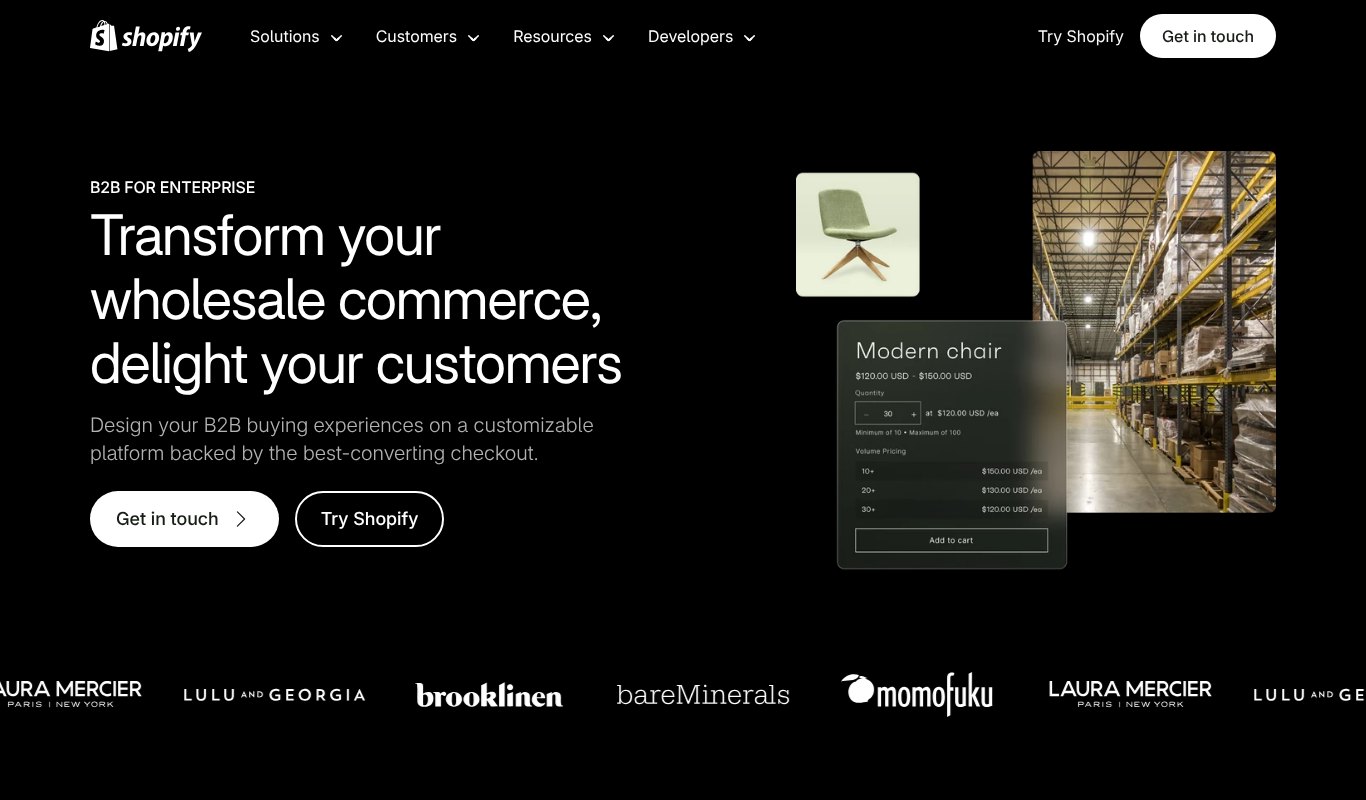
Shopify is the best-known ecommerce platform in the world, and its B2B features have grown a lot. According to Shopify's pricing page, every plan now includes Shopify B2B with up to three catalogs, while Shopify Plus unlocks unlimited catalogs.
You can set company profiles, custom price lists, volume pricing, payment terms and quantity rules. Buyers can log in and reorder from the same store your retail customers use, so you don't need two separate sites.
Shopify's big strength is its app store. Almost anything you need, from quote forms to ERP connectors, is a few clicks away. The downside is that apps add monthly costs, and big B2B setups usually end up on Plus.
Best for. Brands that sell both direct to consumers and wholesale from one store.
Price. Basic is $29 a month paid yearly or $39 month to month. Shopify Plus starts at $2,300 a month.
Pros
- Huge app store and theme library
- B2B tools included on every plan
- Great checkout that converts well
Cons
- Advanced B2B features push you toward Plus
- App costs add up quickly
3. BigCommerce
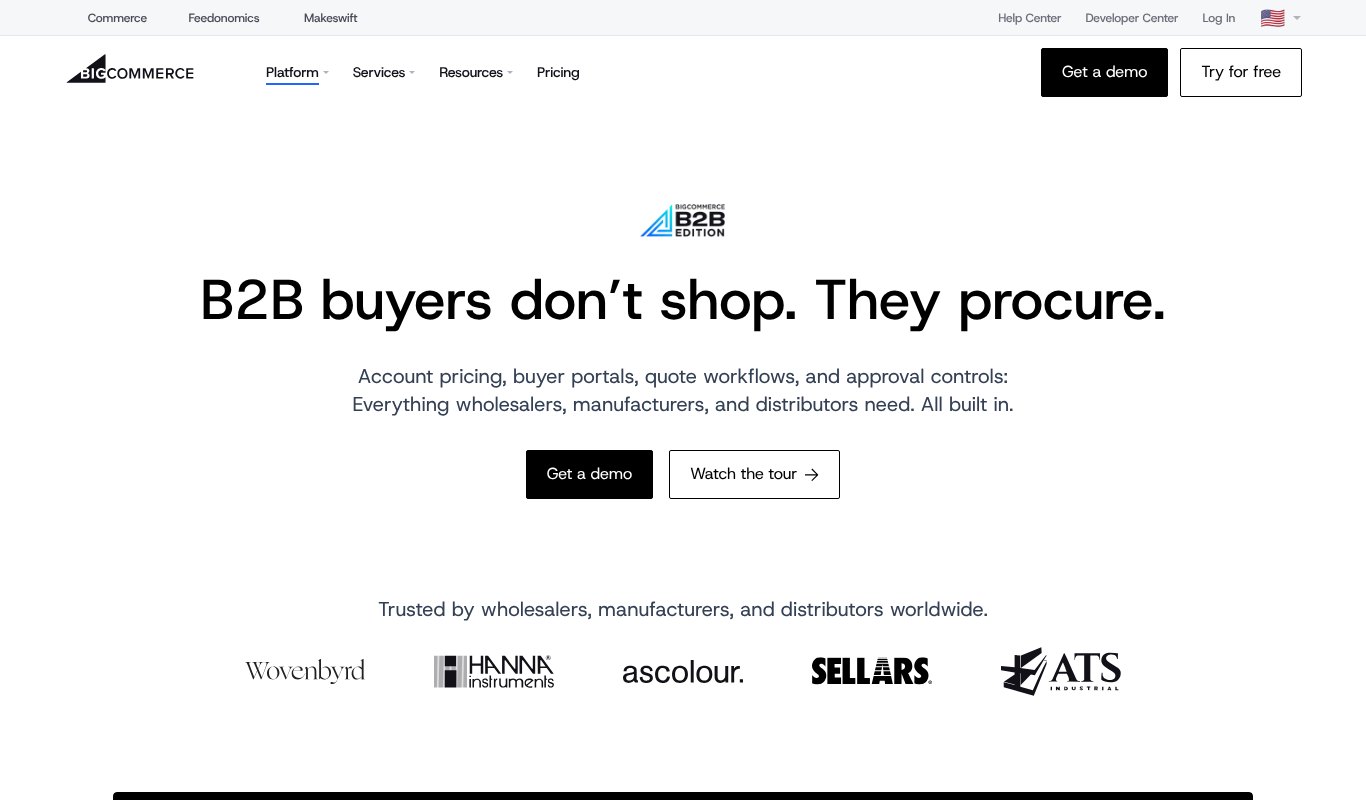
BigCommerce has a dedicated B2B Edition built for wholesalers, manufacturers and distributors. Its own tagline sums it up well. B2B buyers don't shop, they procure.
The B2B Edition includes account pricing, buyer portals, quote workflows and approval controls. Buyers can manage their own accounts, see order history and reorder without calling you.
BigCommerce is a strong pick for mid-size and growing companies that have outgrown simple tools but don't want a heavy enterprise system. It is not cheap at that level, though. Enterprise plans come with custom pricing.
Best for. Mid-size and large B2B sellers who want strong buyer portals and quotes.
Price. Standard plans start at $29 a month paid yearly. Enterprise plans, where most B2B sellers land, start at $1,499 a month billed annually.
Pros
- Full B2B Edition with quotes, approvals and buyer portals
- No transaction fees on most payment providers
- Handles large catalogs well
Cons
- Enterprise pricing is out of reach for small sellers
- Setup often needs a partner agency
4. WooCommerce
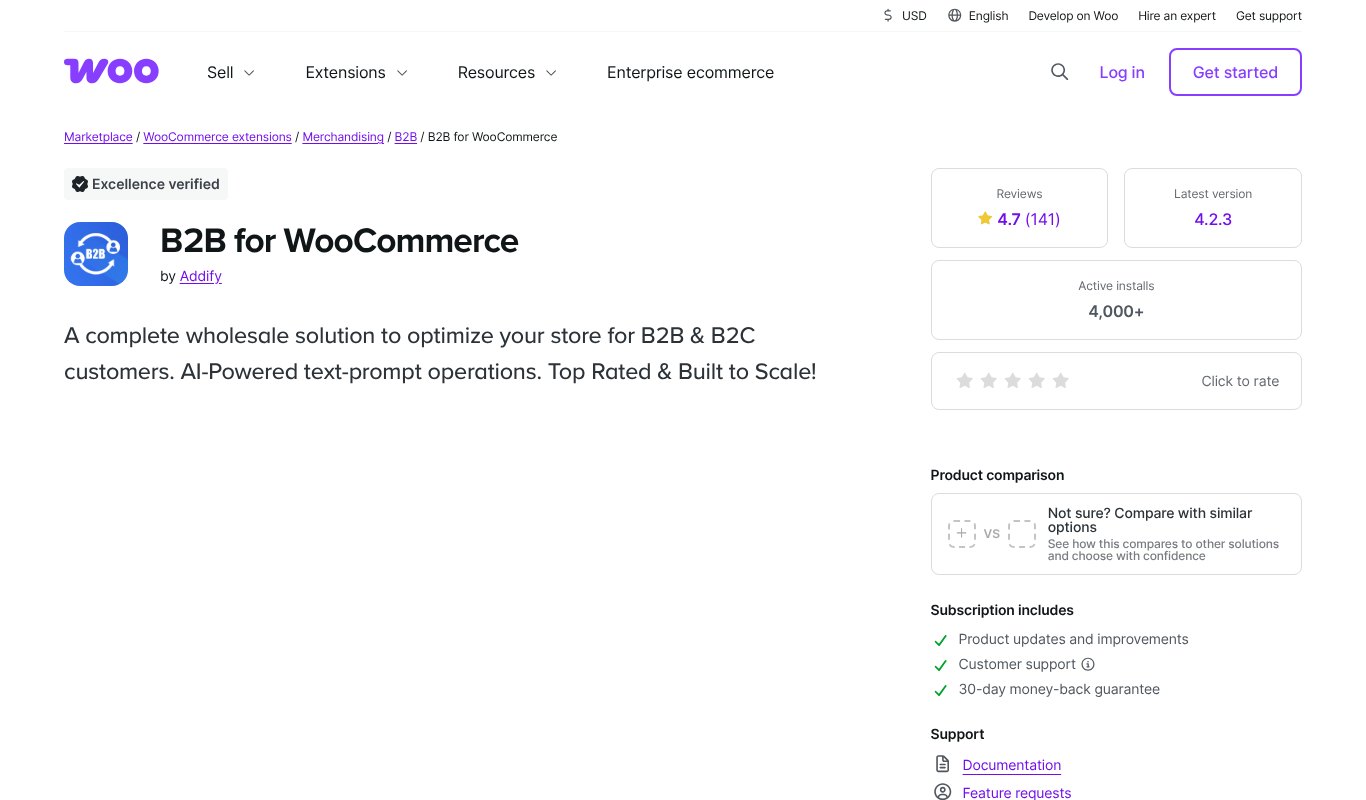
WooCommerce is the free ecommerce plugin for WordPress, and it powers millions of stores. On its own it is built for retail, but extensions turn it into a capable B2B store.
The B2B for WooCommerce extension, listed in the official WooCommerce marketplace, adds role-based pricing, quote requests, tax-exempt buyers, minimum order rules and custom shipping by customer group.
The appeal is control. You own your site, choose your host and can change anything. The catch is that you also handle hosting, updates, security and backups yourself, or pay someone to do it.
Best for. WordPress users who want full control and a low starting cost.
Price. WooCommerce is free. The B2B for WooCommerce extension is $149 a year. Hosting is extra.
Pros
- Free core software with thousands of extensions
- Full ownership of your store and data
- Works with your existing WordPress site
Cons
- You manage hosting, updates and security
- Several extensions can slow the site down
5. Shopware
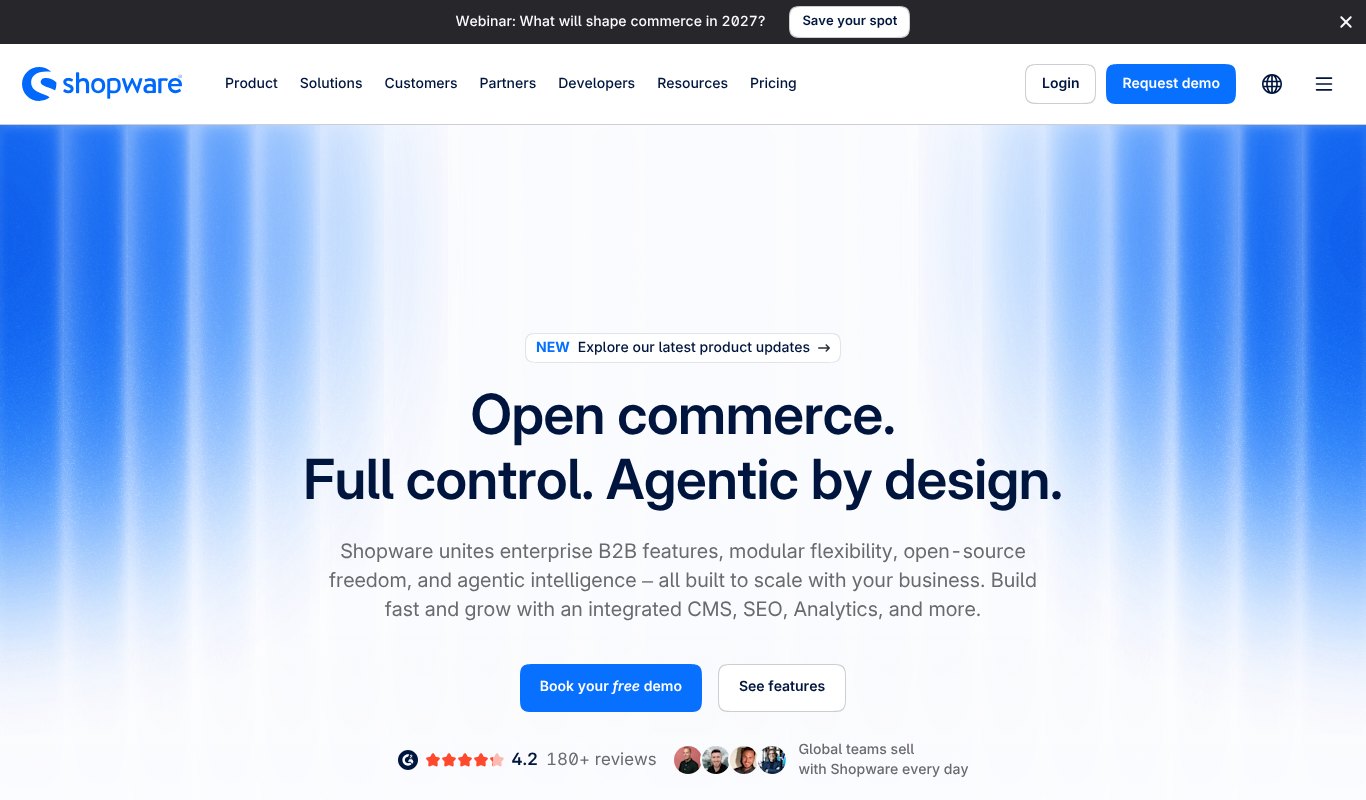
Shopware is a German open source commerce platform that is popular across Europe. It is built for both B2B and B2C selling, and its open source base means there is no lock-in.
According to Shopware's pricing page, B2B components such as quotes and purchasing approvals come with the Evolve plan. You also get strong tools for product content, AI workflows and headless setups.
Shopware suits companies with complex catalogs and an in-house or agency development team. It is powerful, but it is not a weekend project.
Best for. European sellers with complex B2B needs and a development partner.
Price. The open source Community Edition is free. Paid plans start at 600 euros a month (Rise), and the Evolve plan with B2B components starts at 2,400 euros a month.
Pros
- Open source with no vendor lock-in
- Strong B2B features on Evolve
- Excellent for content-rich catalogs
Cons
- B2B features sit on a high-priced plan
- Needs developers to get the most from it
6. Sana Commerce
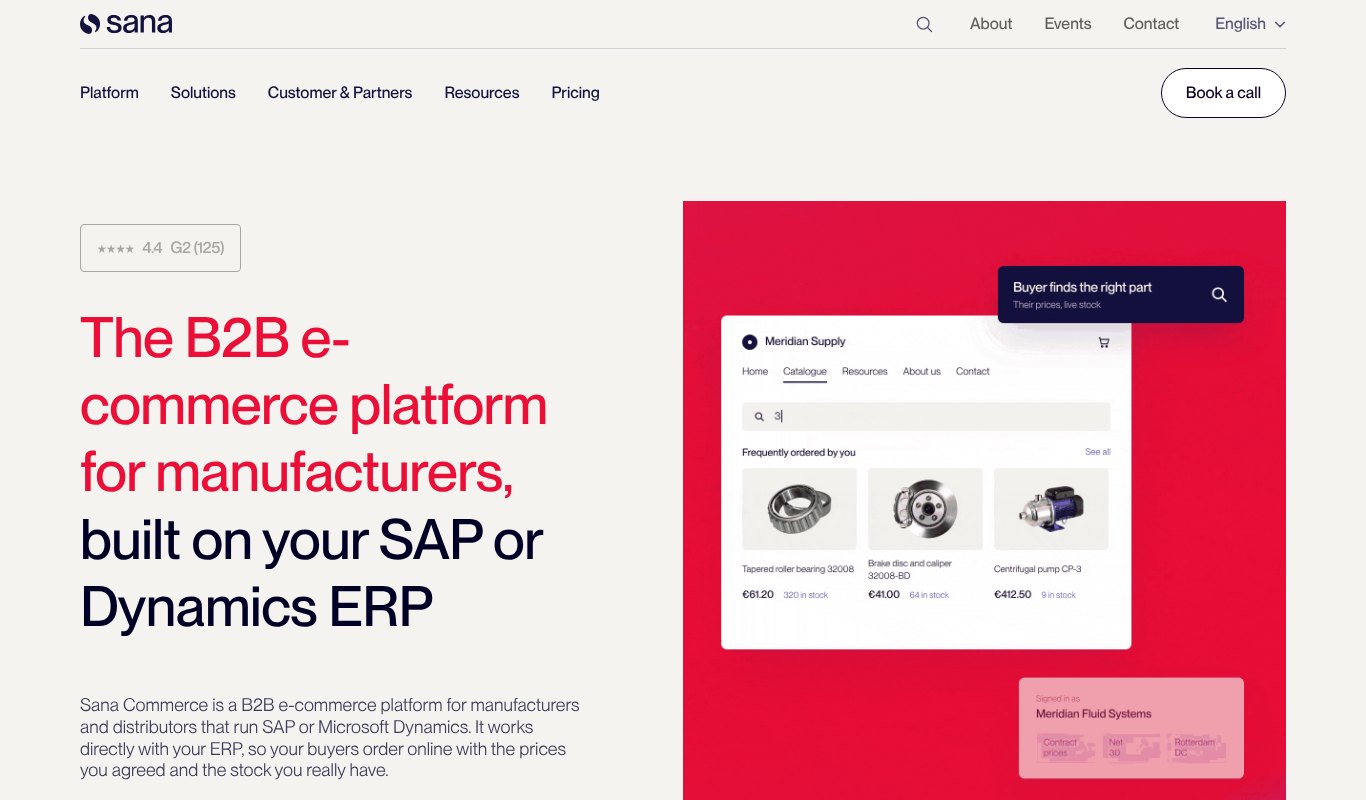
Sana Commerce is built for one kind of business. Manufacturers and distributors that run SAP or Microsoft Dynamics as their ERP.
Instead of syncing data between two systems, Sana works directly with your ERP. Buyers see the exact prices you agreed with them and the stock you really have, because it comes straight from the source.
If your company already lives inside SAP or Dynamics, Sana removes a lot of pain. If you don't use either, it isn't for you.
Best for. Manufacturers and distributors running SAP or Microsoft Dynamics.
Price. Custom quote. Sana does not list prices on its site.
Pros
- Deep ERP connection with live prices and stock
- Built only for B2B, so it fits wholesale well
Cons
- Only works with SAP or Microsoft Dynamics
- No public pricing
7. PrestaShop
PrestaShop is a free, open source ecommerce platform used by many small and mid-size stores, especially in Europe. You download it, install it on your own server and shape it the way you like.
Out of the box it is retail-focused, but customer groups, group pricing and a large module marketplace let you add B2B features like quotes, minimum orders and hidden prices for guests.
It's a good fit if you have a developer and want to avoid monthly platform fees. Without one, the setup and upkeep can feel heavy.
Best for. Developers and tech-savvy sellers who want a free, flexible base.
Price. The software is free. Hosting and paid modules are extra.
Pros
- Free and open source
- Customer groups and group pricing built in
- Large module marketplace
Cons
- B2B features rely on paid modules
- You handle hosting and maintenance
What Is B2B Ecommerce, in Simple Terms
Here's a short explainer video that covers the basics of B2B ecommerce and why so many businesses are moving their wholesale orders online.
How to Choose the Right B2B Ecommerce Platform
The best platform is the one that fits the size and shape of your business today, with room to grow. Ask yourself these questions.
- How many B2B customers do you have? Fifty buyers need a simple store. Five thousand buyers need portals and account tools.
- Do you need custom prices per customer? If yes, check that the platform supports price lists or customer groups.
- Do you use an ERP? If you run SAP, Dynamics or NetSuite, look for a platform that connects to it.
- What is your budget? Be honest about what you can spend each year, including apps, hosting and setup.
- Who will build and run it? If you have no developer, choose a no-code platform you can manage yourself.
- Do you also sell to consumers? A platform that handles both saves you from running two stores.
If you'd like a broader checklist, our guide on how to choose the best ecommerce platform walks through ten things to check before you commit.
Must-Have B2B Features
Whatever platform you choose, these are the features that make the biggest difference for business buyers.
- Customer accounts with order history. Buyers should see what they ordered before and reorder in a click.
- Price lists or customer groups. So each buyer sees the right price.
- Bulk and quick order forms. Let buyers add many products at once by SKU.
- Minimum order quantities. Protect your margins on small orders.
- Flexible payments. Card payments for small orders, invoices and terms for regular accounts.
- Shipping rules by customer. Freight, pallets or local pickup where it makes sense.
- Email follow-ups. Reorder reminders and abandoned cart emails bring buyers back.
For a closer look at the features that lift sales on any store, read our list of ecommerce website features that boost sales.
B2B Ecommerce Trends to Watch in 2027
B2B buying keeps moving online, and buyers now expect the same easy experience they get as consumers. Here are the shifts that matter most.
Self-service is now expected. Buyers want to check prices, stock and order status without waiting for a rep. Platforms that offer good buyer portals win repeat business.
AI is helping with content and search. AI now writes product descriptions, suggests related products and helps buyers find the right part faster. This saves sellers hours of catalog work.
Mobile ordering is growing. More buyers place orders from the warehouse floor or a job site, so your store must work well on a phone.
Smaller sellers are going online too. It's no longer just big manufacturers. Small wholesalers and makers now sell B2B online, which is why low-cost, no-code platforms have become so popular.
How to Launch a B2B Store, Step by Step
- Pick your platform. Use the questions above to narrow it down to one or two, then try them.
- Organize your catalog. Clean product names, SKUs, photos and bulk prices before you upload anything.
- Set up customer groups. Decide who sees which prices, and how buyers will be approved.
- Choose payment and shipping options. Cards for new buyers, invoices for trusted accounts, and the right shipping methods.
- Invite your existing customers. Send a short email showing them how much faster ordering will be.
- Follow up and improve. Watch what buyers order, add reorder reminders and tweak your catalog.
Starting from zero? Our guide on how to build an online store from scratch covers each step in plain language.
Mistakes to Avoid
- Buying more platform than you need. An enterprise suite is wasted money if you have fifty buyers.
- Ignoring hidden costs. Apps, hosting, payment fees and agency hours can double the real price.
- Hiding prices from everyone. Show guests at least a starting price, or many will leave.
- Forgetting about reorders. Repeat orders are the heart of B2B, so make them painless.
- Launching without telling customers. Your best buyers need a nudge and a short walkthrough to switch.
FAQ
What is the best B2B ecommerce platform for small businesses?
For most small wholesalers, a simple, low-cost platform is the smart choice. ShopFunnels and Shopify are both easy to launch without a developer, and ShopFunnels charges no transaction fees.
Can I sell B2B and B2C from the same store?
Yes. Shopify, BigCommerce and WooCommerce all support both. With ShopFunnels you can also run separate stores for wholesale and retail on one domain.
How much does a B2B ecommerce platform cost?
It ranges from free open source software, plus hosting, to thousands of dollars a month for enterprise plans. Small sellers can start for under $100 a year.
Do I need an ERP connection?
Only if you already run an ERP and handle a lot of orders. Smaller sellers can manage stock and orders inside the ecommerce platform itself.
How long does it take to launch a B2B store?
With a no-code builder and a clean catalog, you can launch in a few days. Enterprise projects with ERP connections often take several months.
Final Thoughts
The right B2B ecommerce platform depends on your size, your budget and how complex your buyers are. Big manufacturers with an ERP will lean toward BigCommerce, Shopware or Sana. Developers who want full control will like WooCommerce or PrestaShop.
But if you're a small or growing seller who wants a professional store, sales funnels and no per-order fees, try ShopFunnels. You can launch your B2B store in minutes and start taking orders for less than the price of a coffee each month.